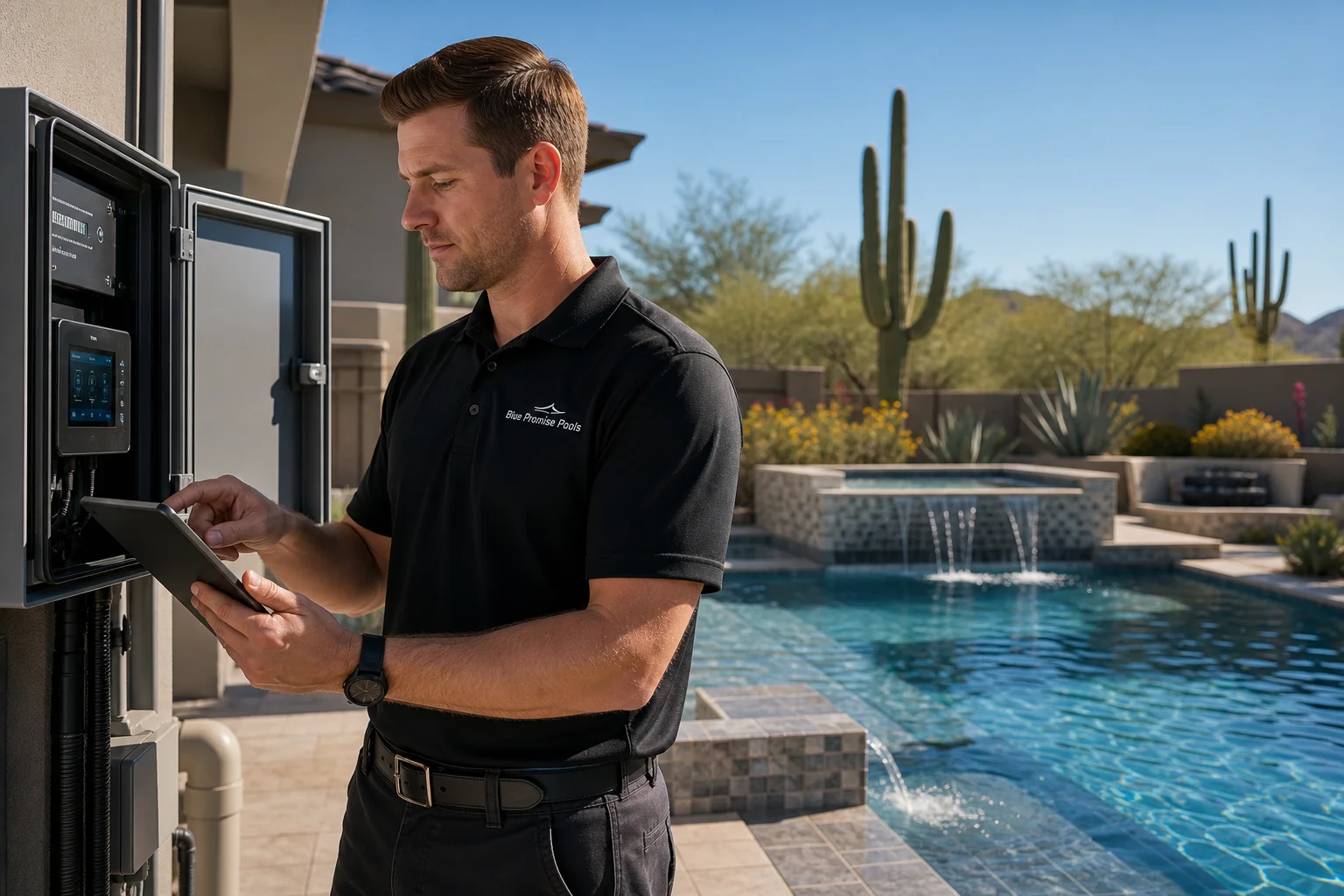
Pool automation systems let Scottsdale homeowners control pool temperature, lighting, and water features from a phone app instead of manual valves. For desert backyards where every trip outside means facing triple digit heat, that convenience often pays for itself. Whether you are planning new Pool Construction or upgrading an existing pool, automation is worth a serious look.
By Blue Promise Pools Team, Pool Construction Experts
What Is a Pool Automation System?
A pool automation system is a central control system that connects your pump, heater, lighting, and water features to one app or wall mounted panel. Instead of walking outside to flip breakers or adjust valves, you tap a screen. Systems from brands like Pentair and Jandy tie together nearly every piece of pool equipment in your backyard, including cleaners, salt chlorinators, and spa jets. For a swimming pool built into an active Scottsdale household, that single point of control cuts down on guesswork and forgotten steps.
How Pool Automation Systems Work in Your Backyard
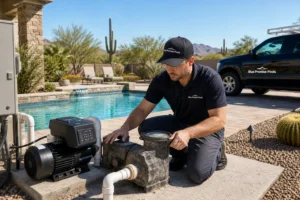
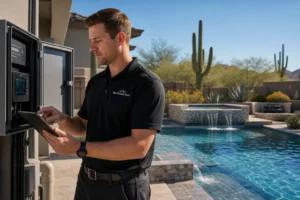
Installing a pool automation system starts with a control panel wired to your equipment pad, paired with a wifi bridge that talks to an app on your phone. Professional installation typically takes a technician a few hours once the electrical groundwork is in place. From there, you can schedule pump run times, adjust spa control settings, and turn on water features for an evening swim, all without touching a single breaker. If you are adding automation to an existing pool, most of the physical items, pump, filter, heater, do not need to be replaced. The control system simply learns to talk to what is already there.
Automation reduces manual mistakes, but it does not eliminate every equipment failure. If a pump or heater does go down unexpectedly, a same day service call typically starts with a technician diagnosing the issue at the equipment pad, then repairing or replacing the failed part so your pool is back to normal as quickly as possible.
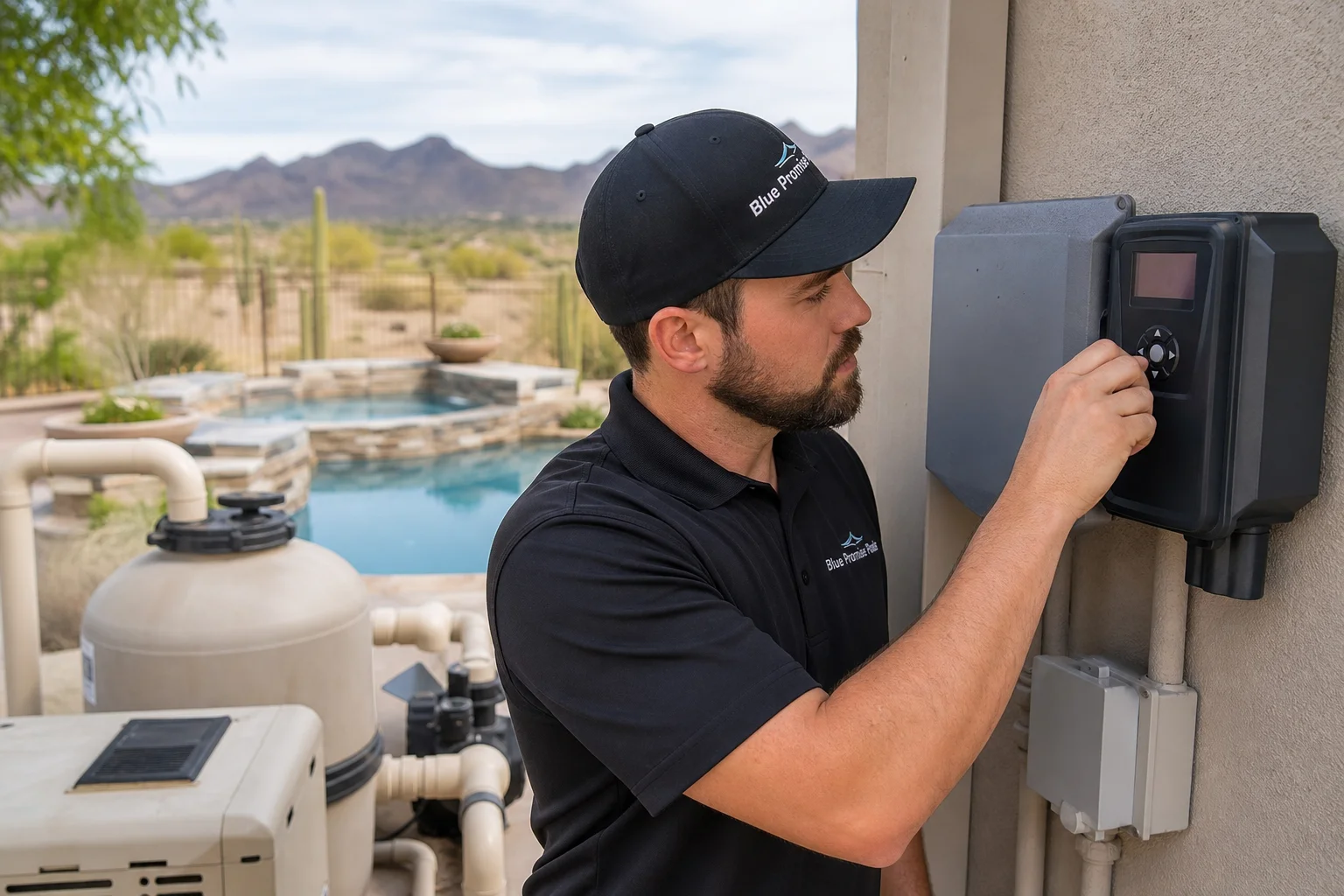
Key Features Worth Automating
Pump, Heater, and Temperature Control
Your pump heater setup is the biggest energy user in the backyard. Automation adjusts pump speed and heater temperature based on time of day, cutting energy use during Scottsdale's peak summer rates. You can control pool temperature from your phone before you even walk outside. Arizona summers push water temperatures into the 90s fast, and staying ahead of that heat is easier with a few extra tips for beating the heat.
Water Features and Lighting
Fountains, waterfalls, and other water features add ambiance, but manual valves make them a hassle to run consistently. Automation lets you add scheduled lighting scenes and turn water features on for a party without a separate switch for each item.
Pool Spa Combinations
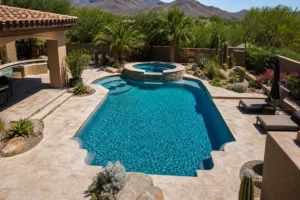
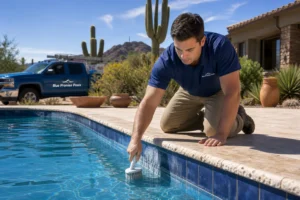
For a pool spa setup, automation systems separate spa control from pool control so the spa can heat up on its own schedule while the pool stays at a lower daytime temperature. Some systems also pair with chemical feeders that monitor water balance in real time. Even with that kind of automation, chemistry still comes down to keeping sanitizer, pH, and alkalinity within range so the water stays safe and the equipment stays protected from scale or corrosion. Automated monitoring makes it easier to catch a reading before it drifts, but a technician should still confirm balance during regular visits.
Smart Home Integration: Your App, Alexa, and Google Home
A pool automation system usually pairs with a smart home ecosystem, so the same app that manages your thermostat can also control pool equipment. Many systems work with Alexa and Google Home, letting you say a simple voice command to turn on the spa before you get home from work. That kind of integration means your pool becomes one more device in a connected home instead of a separate hassle.
What You Actually Get for the Cost
Whether pool automation systems are worth it depends on how often you use your pool and how much manual upkeep frustrates you. Homeowners who travel often appreciate being able to check on their equipment remotely, while daily swimmers like the convenience of walking into a pool that is already at the right temperature. Automation will not replace the value of professional care. Our team still recommends pairing any automation upgrade with Weekly Pool Service so a technician catches chemistry issues, filter wear, or equipment problems automation cannot see on its own. Whether automation changes that math depends on how much of the chemistry work you want to keep doing yourself; we cover the DIY versus service tradeoffs in more detail in a separate post. Choosing the best pool automation system for your household usually comes down to matching features to how your family actually uses the backyard, not chasing every add on available.
Frequently Asked Questions
How much does a pool automation system cost in Scottsdale?
Cost depends on how much existing equipment you keep, how many features you automate, and whether you are retrofitting an existing pool or building new. A basic setup that covers pump and lighting costs less than a full system with spa control, water features, and chemical monitoring. Ask a technician for a quote based on your specific equipment pad.
Can I add pool automation to an existing pool, or does it require new construction?
Most existing pools can be retrofitted with automation as long as the equipment pad has room for a control panel and reliable wifi coverage. New construction makes wiring cleaner, but it is not a requirement. A technician can evaluate your current pump, heater, and lighting setup during an inspection.
Does pool automation work with Pentair and Jandy equipment?
Yes. Most pool automation systems are built to communicate with major equipment brands, including Pentair and Jandy pumps, heaters, and salt systems. Compatibility depends on the age of your existing equipment, so it helps to confirm model numbers before choosing a control system.
How does pool automation help during Arizona's hottest months?
Automation lets you run your pump during cooler overnight hours, schedule the heater or chiller for comfortable swim temperatures, and monitor water levels remotely during high evaporation periods. That reduces energy waste and keeps water quality more consistent through triple digit stretches.
Is pool automation worth it for a small backyard pool?
Smaller pools still benefit from automation, especially for scheduling and remote monitoring, though the energy savings may be less dramatic than on a larger pool with a spa and water features. The value often comes down to convenience as much as cost savings.
Get Your Pool Automation System Installed Right
Every backyard is different, and the right setup depends on your existing equipment and how your family actually uses the pool. Contact us today and our team will walk you through what a pool automation system could look like for your home.