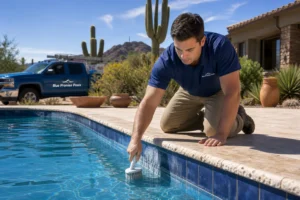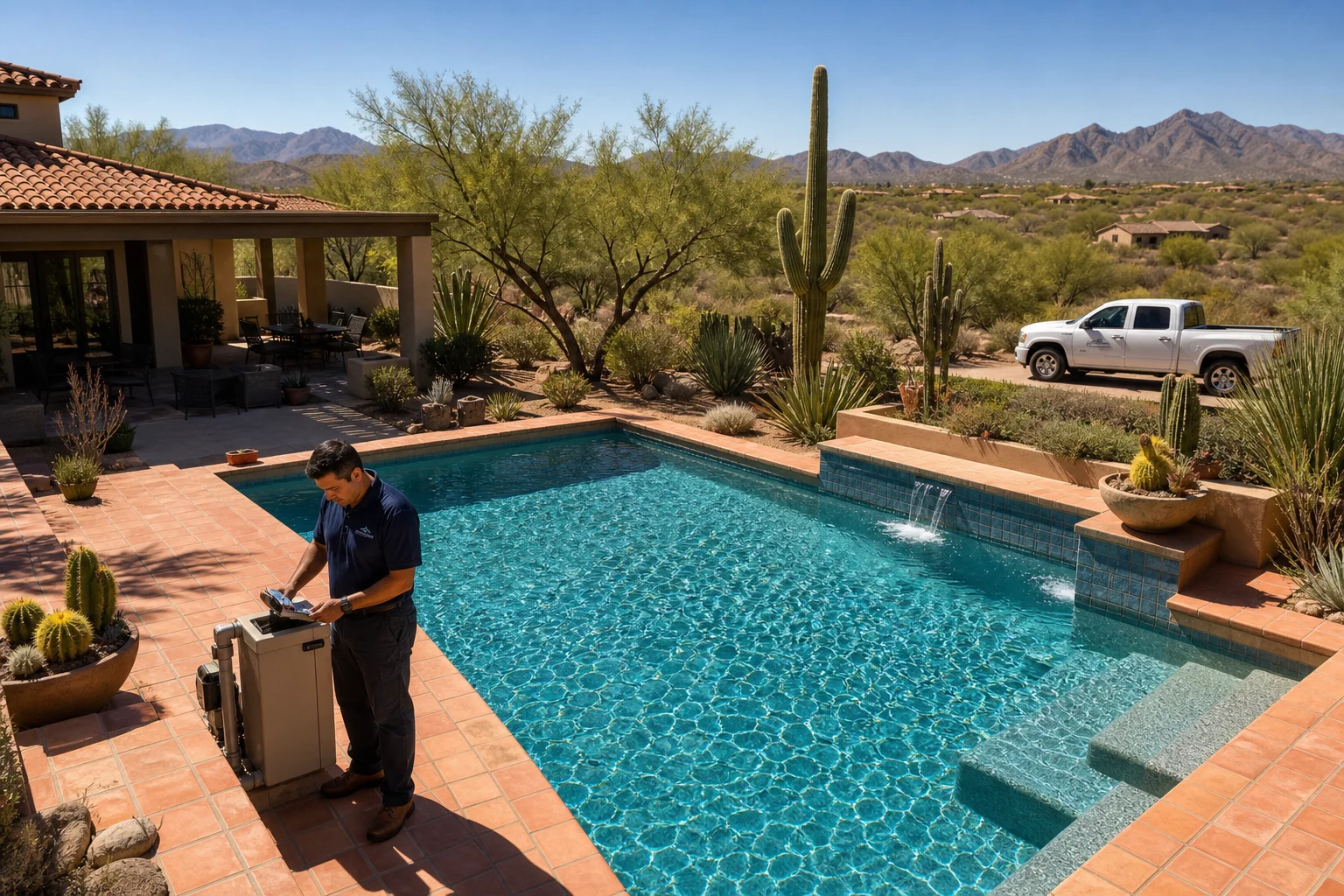
Keeping your pool cool during Arizona's scorching summer starts with the right combination of covers, circulation adjustments, and consistent Weekly Pool Service to keep your swimming pool balanced and genuinely refreshing. When Scottsdale temperatures push past 110°F for weeks at a time, proactive strategies are what separate a cool, inviting pool from an overheated soak.
By Blue Promise Pools Team, Pool Construction Experts
Why Arizona Pool Water Heats Up Faster Than You Think
Arizona's desert climate combines intense solar radiation with extremely low humidity, creating conditions where pool water absorbs heat at a rate most homeowners underestimate. During peak summer months, the Phoenix metro regularly sees 12 or more consecutive hours of direct sunlight, and an unshaded pool surface acts almost like a solar collector. In low-humidity environments, minimal atmospheric moisture means solar energy strikes the pool water surface with very little filtering, and the absence of humidity reduces the natural insulation that would otherwise moderate overnight temperature swings.
For the average Scottsdale backyard swimming pool, water temperatures can climb into the high 80s or even exceed 90°F by late afternoon. That is not refreshing, and it also stresses pool water chemistry, accelerating chlorine loss and encouraging algae growth. Understanding this daily heat cycle is the foundation of every cooling strategy covered below.
Top Methods for Keeping Your Pool Cool During Arizona's Scorching Summer
The fundamentals of keeping your pool cool during Arizona's scorching summer come down to three levers: blocking solar heat input, moving water strategically, and staying ahead of pool maintenance. No single fix works in isolation, but combining a few approaches produces results you can feel within days.
Use a Pool Cover During Peak Sun Hours
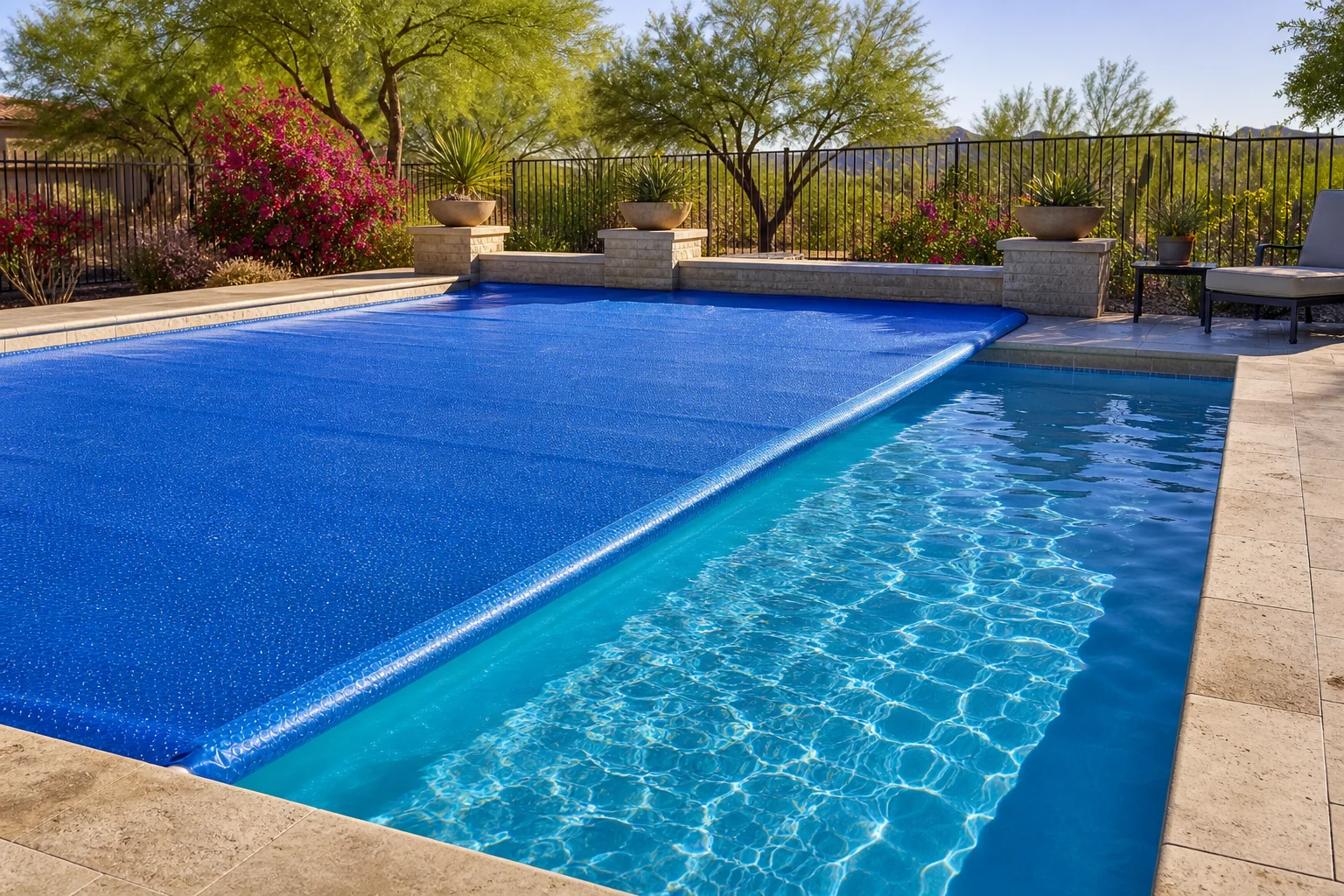
A pool cover is one of the most effective tools for managing summer heat. The core strategy surprises many homeowners: rather than covering the pool overnight only, keep pool water protected during the hottest window of the day, roughly 10 a.m. to 4 p.m., to block direct solar gain. Remove the cover in the evening so the water can release stored heat into the cooler desert air overnight.
Solar covers, sometimes called bubble covers, are particularly effective. They reflect a portion of incoming sunlight while also reducing evaporation significantly. In Arizona, evaporation is a serious factor. A typical pool can lose two to three inches of water per week in summer without a pool cover in place. Beyond water conservation, keeping pool water covered during peak sun hours can reduce water temperatures by 5 to 10 degrees Fahrenheit compared to a fully exposed swimming pool.
Liquid solar covers are another option for households where a traditional cover feels cumbersome. They form an invisible layer on the pool water surface that slows both evaporation and solar heat transfer. They won't cool the pool as aggressively as a bubble cover, but they're a low-friction solution for pools in constant daily use.
Adjust Pump Timing to Fight Heat
Most homeowners run their pool pump overnight to take advantage of off-peak electricity rates. During Arizona summers, consider shifting part of the pump's daily runtime to the afternoon. Running circulation during peak heat hours pulls cooler water up from the bottom and mixes it with warmer surface water, reducing the hot-surface stratification that makes afternoon swimming uncomfortable.
Running aerator attachments on return jets during evening hours is another practical approach. Aerators spray pool water into the air, using evaporation to shed heat. This process can drop pool water temperature by 3 to 5 degrees overnight when combined with the cooler desert air that typically settles in after 8 p.m.
Shade, Landscaping, and Natural Cooling Strategies
Strategic shade is one of the most durable long-term investments for pool comfort. Planting tall desert trees, palo verde, fan palms, or desert willow, on the west and southwest sides of the pool provides afternoon shade during the most intense heat of the day. Pergolas, shade sails, and retractable awnings achieve the same goal with more flexibility and faster installation.
If you're planning a new pool, orientation matters. Pools aligned on a north-south axis receive less direct sun exposure during peak hours compared to those running east-west. Our Services page covers the full range of design and construction options if you're thinking about a pool project built around Arizona's summer climate from the ground up.
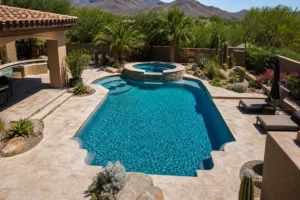
Moving water features also help. Fountains, bubblers, and spillover walls increase the surface area of pool water exposed to air, which accelerates evaporative cooling. Running these features during cooler evening hours can knock a few additional degrees off overnight and make your pool noticeably more comfortable before morning.
Pool Maintenance and Water Chemistry in the Heat
Consistent pool maintenance becomes even more critical in summer. High temperatures accelerate chlorine degradation, meaning the same dose that balanced your pool in April won't be enough in July. Unchecked chemistry quickly leads to cloudy water, algae blooms, and swimmer irritation, and all of those problems compound during a heat wave.
Check your swimming pool water chemistry at least twice a week in summer, paying close attention to pH (target 7.4 to 7.6), free chlorine, and total alkalinity. A mid-week shock treatment helps keep water clear and safe during the hottest stretches. Testing more often and adjusting sooner rather than later is what keeps chemistry stable once temperatures climb, and our pool chemistry guide goes deeper into target ranges built around Scottsdale's water.
Arizona's hard water adds another layer of complexity in summer. High temperatures cause calcium and magnesium to precipitate out of solution faster, leaving scale on pool surfaces and equipment. Staying ahead of that buildup means addressing it before it hardens, and our hard water guide covers mineral management strategies specific to the Valley.
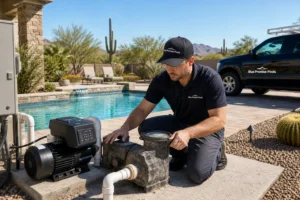
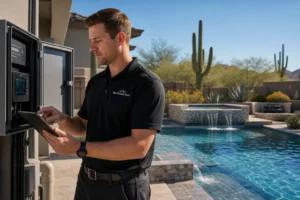
If you're weighing summer pool maintenance yourself against bringing in a professional, the tradeoff usually comes down to time and consistency. Summer chemistry needs closer attention than most other seasons, and a missed week during a heat wave can undo weeks of balanced water, so homeowners who travel often, or who would rather spend weekend time in the pool than testing it, tend to find a scheduled service pays for itself in avoided algae blooms and equipment wear. Getting ahead of the season matters just as much as managing it once it arrives: inspecting pump and filter equipment, dialing in chemistry, and testing your cover setup before temperatures peak means fewer surprises once the heat is already stressing your system.
Frequently Asked Questions
What is the fastest way to keep pool water cool in Arizona?
Using a pool cover during peak sun hours (10 a.m. to 4 p.m.) combined with running aerators on return jets in the evening is the fastest practical cooling combination. A solar or bubble pool cover can lower pool water temperature by 5 to 10 degrees, and overnight aeration adds another 3 to 5 degrees of cooling before the next day's heat builds again.
How often should I run my pool pump in summer to keep pool temperatures down?
Run the pump six to eight hours daily at minimum, with at least part of that runtime during the hottest afternoon hours. Circulating pool water during peak heat prevents surface stratification, where the top layer of the swimming pool becomes significantly hotter than the water below and is the first thing you feel when you step in.
Does a pool cover actually help in Arizona's extreme heat?
Yes, significantly. A pool cover blocks direct solar radiation and reduces evaporation, which is the primary driver of daytime heat absorption in a dry climate. Without a pool cover, an Arizona pool can lose two to three inches of water weekly, and that continuous evaporation cycle also accelerates heat gain at the pool water surface.
Can landscaping meaningfully lower pool temperature?
Strategic afternoon shade from trees or structures on the west and southwest sides of the pool can reduce peak surface temperatures by several degrees. Palo verde and desert willow are popular Scottsdale choices because they provide effective shade without aggressive root systems that could damage pool decking or underground plumbing.
How does water chemistry relate to pool temperature control?
Higher pool water temperatures accelerate chlorine loss and create ideal conditions for algae. A swimming pool running consistently hot in summer will burn through sanitizer faster, meaning chemistry checks and adjustments need to happen more frequently. Proper pool maintenance schedules should scale up in frequency as temperatures rise through June and July.
Keep Your Backyard Pool Refreshing All Summer Long
A genuinely cool, clear swimming pool is achievable through Arizona's hottest months with the right combination of covers, circulation habits, and consistent care in place. If you'd like an expert summer maintenance plan built around your backyard and schedule, Contact the Blue Promise Pools team and we will make sure your pool stays comfortable from Memorial Day through Labor Day.