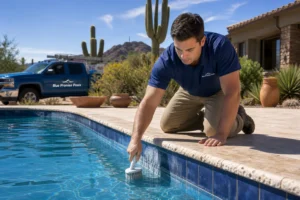
Maintaining perfect pool clarity in Arizona's monsoon season is one of the most overlooked parts of summer pool care. From June through September, storms bring dust, debris, and heavy rainfall that can cloud your water within hours. With the right routine and Weekly Pool Service support, Scottsdale homeowners can stay ahead of every storm.
By Blue Promise Pools Team, Pool Construction Experts
Why Monsoon Season Puts Your Pool to the Test
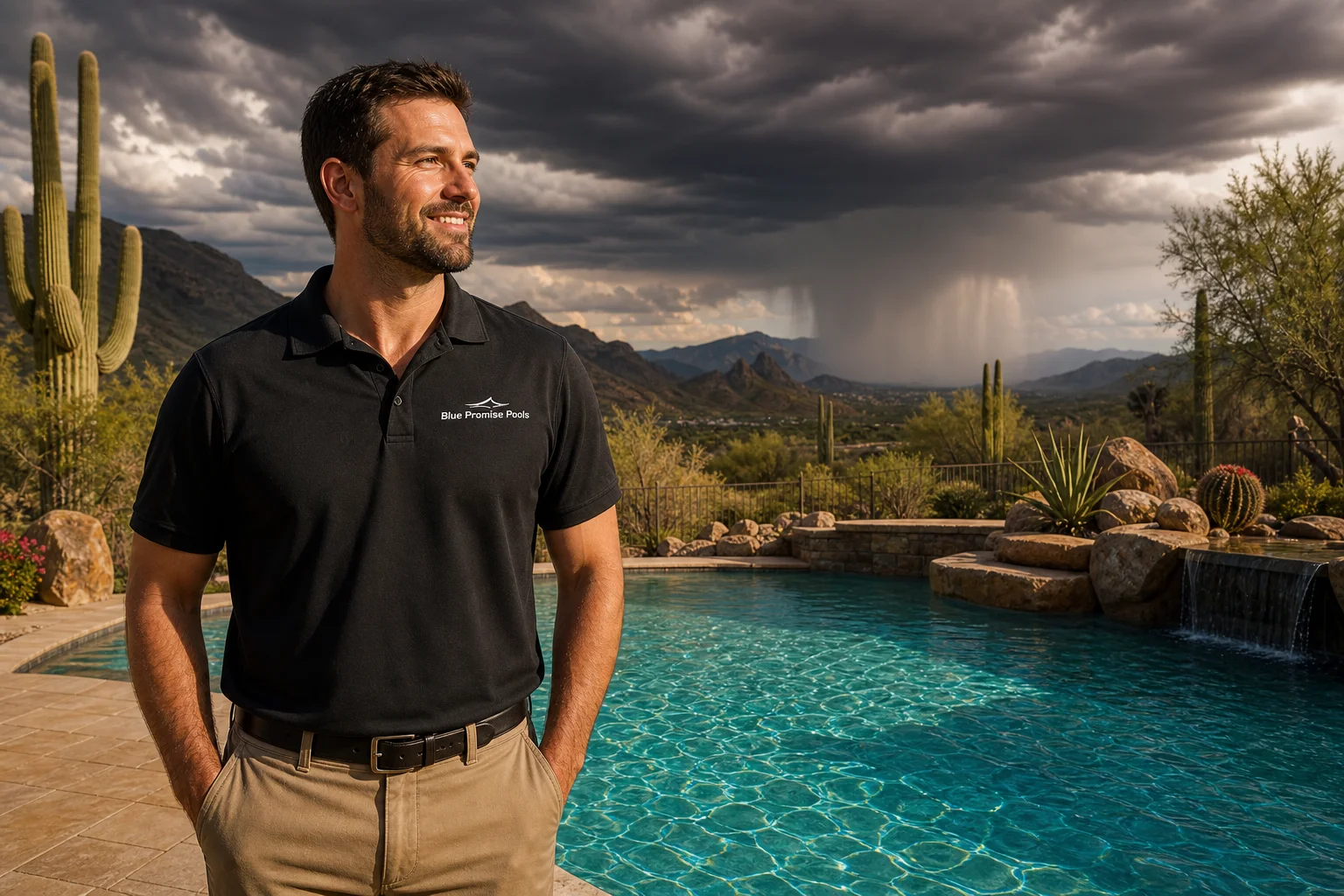
Arizona monsoon season officially runs from June 15 through September 30. According to NOAA, the Phoenix metro typically receives 2.5 to 4 inches of precipitation during this period, much of it arriving in short, violent bursts. Those storms carry high winds, blowing dust, pollen, and organic material that settle directly into your pool water.
The chemistry challenge is immediate. Rainwater is naturally slightly acidic and contains no chlorine. A single heavy storm can dilute your sanitizer, lower pH, and introduce enough organic material to trigger an algae bloom within 24 to 48 hours. Understanding what each pool monsoon event does to your water is the foundation of maintaining perfect pool clarity in Arizona's monsoon season. It follows a predictable pattern: test fast, clean fast, adjust, and repeat.
Testing and Balancing Pool Water Chemistry After a Storm
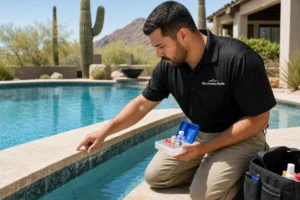
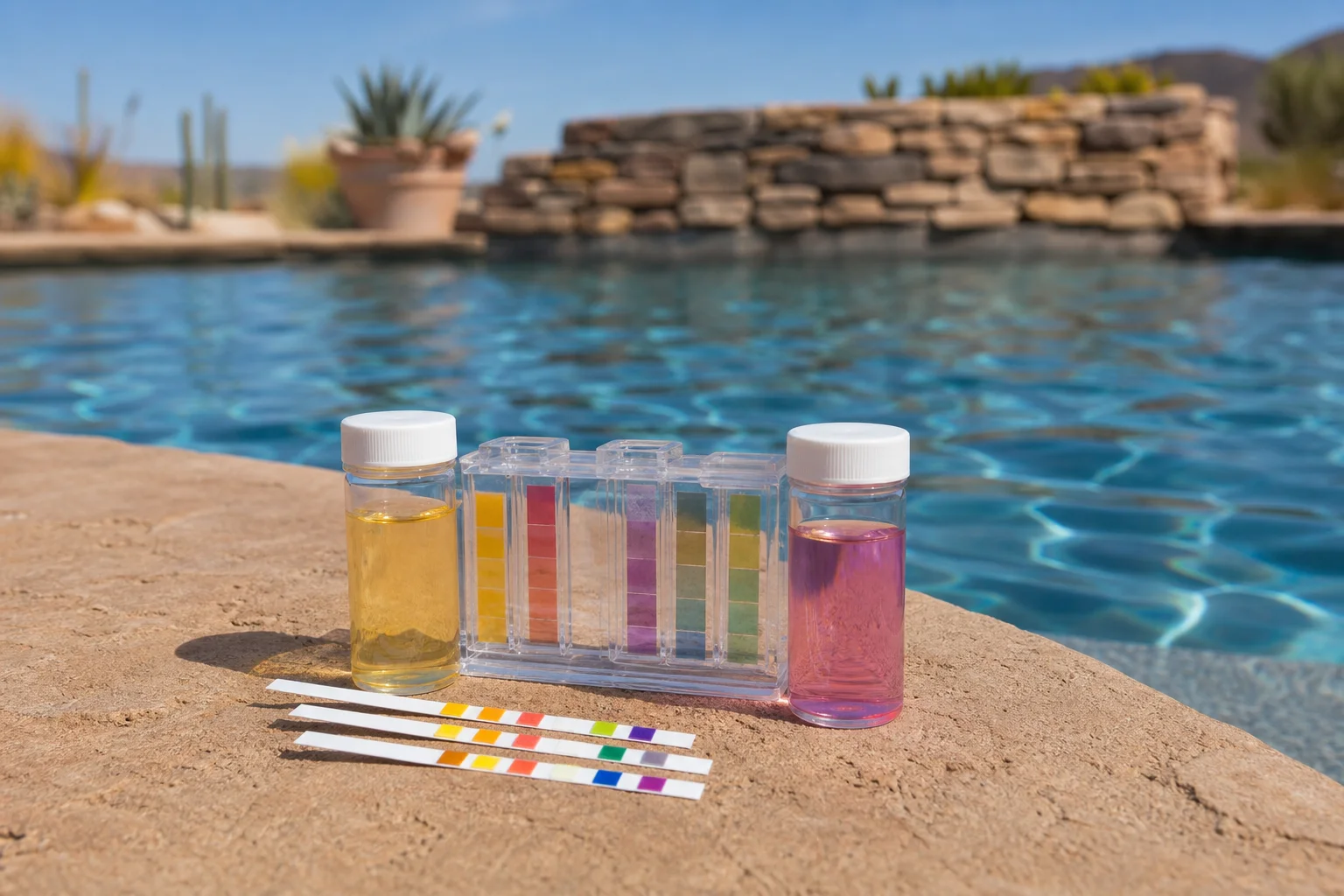
Water chemistry is your first and most important line of defense. After any significant pool monsoon storm, test your pool water within 24 hours. Check free chlorine (target 2.0 to 4.0 ppm), pH (7.4 to 7.6), total alkalinity (80 to 120 ppm), and cyanuric acid (30 to 50 ppm for outdoor pools with full sun exposure).
If free chlorine has dropped below 1.0 ppm, shock the pool immediately. Add your shock treatment at sunset to prevent UV burn-off before it has time to work. Adjust pH and alkalinity before shocking, because unstable alkalinity makes pH hard to hold steady.
For detailed target ranges and testing schedules built for Arizona pools, Understanding Pool Chemistry: A Scottsdale Homeowner's Guide walks through every step.
Hard water adds another layer to the challenge. Phoenix tap water is high in calcium, and after heavy rain dilutes your pool, mineral concentrations shift in ways that can cloud the water further. Dealing with Hard Water in Your Arizona Pool covers calcium management through the season and beyond.
Removing Dust Debris Quickly After Monsoon Storms
Arizona monsoon storms are famous for haboobs, fast-moving walls of blowing dust that coat everything in minutes. When that dust debris settles into your pool water, it creates a cloudy, silty layer that feeds algae and clogs filters. Chemical treatment is far less effective until the physical material is removed first.
Act within two to three hours of any dust storm. Skim the surface with a fine-mesh net before particles sink to the floor. Brush the walls and floor toward the main drain. Vacuum to waste rather than recycling debris back through your filtration system. Keep the pump running for at least eight hours after a major storm to turn the water repeatedly through the filter.
Consistent skimming habits make chemical balancing faster and cheaper. Weekly Pool Service vs. DIY: What Scottsdale Homeowners Need to Know helps you decide how much of this routine to handle yourself.
Protecting Your Pool Equipment During Monsoon Season
Pool equipment takes direct punishment during monsoon season. Heavy winds blow loose material into pump baskets and skimmer boxes. Standing water around the equipment pad can introduce contaminants into the plumbing. Electrical components near the pool face moisture exposure if not properly weatherproofed.
After every significant storm, clear your pump basket and skimmer basket before restarting the system. Look for visible damage to the equipment housing, loose fittings, or any sign of water near electrical connections. If your pump sounds labored, the pressure gauge reads unusually high, or you see water pooling near the motor, stop the system and call for an inspection. Early damage is far less expensive to repair than a full motor replacement. Contact Pool Repair professionals to evaluate any post-storm concerns.
Heat compounds the stress on equipment throughout the summer. Keeping Your Pool Cool During Arizona's Scorching Summer covers practical strategies for reducing thermal wear on pumps and plumbing all season long.
Keeping Your Filtration System Ready and Running Through Active Monsoon Months
Getting your filtration system ready before active monsoon months makes a real difference because the system carries its heaviest load when storms hit. When debris spikes after a storm, filter pressure climbs faster than normal. Running a clogged filter stresses the pump motor, slows water circulation, and leaves bacteria and algae a longer window to grow.
Check your filter pressure every two to three days from July through August instead of weekly. A reading 8 to 10 psi above your clean baseline means it is time to backwash a sand or DE filter, or rinse a cartridge filter. Keeping the filtration system clean and running efficiently is the single biggest factor in maintaining perfect pool clarity in Arizona's monsoon season.
If your filtration system is more than five years old, ask a professional whether it is still correctly sized for your pool volume. Monsoon season debris loads expose undersized or aging equipment faster than any other time of year. For a complete picture of year-round maintenance, Your Guide To Annual Pool Maintenance In Arizona is a comprehensive seasonal reference.
Frequently Asked Questions
How often should I test my pool water chemistry during monsoon season?
Test your pool water at least twice a week during active monsoon months, and within 24 hours of any major storm. Arizona's summer heat accelerates chlorine loss, and a single rainstorm can shift pH and alkalinity enough to start an algae bloom. Quick, frequent testing prevents the need for expensive corrective treatments and lost swim days.
What should I do right after a haboob hits my pool?
Skim the surface with a fine-mesh net within two to three hours to remove floating dust debris before it sinks. Brush the walls and floor, vacuum to waste, and keep the pump running for at least eight hours. Then test your water chemistry and adjust chlorine and pH as needed. Acting quickly reduces how much chemical correction your pool requires.
Can heavy monsoon rain cause my pool to overflow?
Yes. If your pool is already near its maximum fill line, heavy rainfall can push the water level above the skimmer opening. When that happens, the filtration system cannot draw water properly, reducing circulation and allowing contaminants to build up. Lower the water level by an inch or two before an approaching storm if your pool is close to full.
Why does my pool turn green so fast after a monsoon storm?
Algae blooms happen when chlorine levels drop and organic nutrients enter the water at the same time. Monsoon storms deliver both conditions: rain dilutes your sanitizer while dust and debris feed algae. The solution is fast action on water chemistry after every storm. Shock the pool promptly and maintain consistent chlorine levels throughout the season to keep algae from gaining ground.
Should I use a pool cover during monsoon season?
A cover can reduce the debris entering your pool during high winds. However, Arizona's intense summer heat means a solid cover can significantly raise water temperature. A mesh safety cover offers a useful middle ground, filtering out leaves and larger debris while allowing some airflow. Weigh the debris reduction benefit against the temperature trade-off before deciding whether to cover before each storm.
Maintain Perfect Pool Clarity Through Arizona's Monsoon Season
Staying consistent with testing, debris removal, and equipment checks is what separates a clear pool from a cloudy one through every storm this summer. If you want a team that knows local conditions inside and out, explore our Services and let Blue Promise Pools maintain pool clarity for you all season long.