Pool tile cleaning and repair is the most reliable way to keep a Scottsdale swimming pool looking sharp, safe, and free of the chalky scale that Arizona's hard water leaves behind. From calcium buildup at the waterline to cracked tile that lets water infiltrate behind the shell, our Services address every stage of the problem.
By Blue Promise Pools Team, Pool Construction Experts
Why Arizona's Climate Is Hard on Pool Tile
Scottsdale's summers push water temperatures well above 90 degrees at the surface, which accelerates evaporation and concentrates minerals in your swimming pool faster than in almost any other climate in the country. That concentrated mineral load settles along the waterline and produces scale on tile within weeks of a fresh fill.
Arizona tap water is also naturally high in calcium and magnesium. Most homeowners top off their pools with this hard water continuously through summer, compounding the mineral load over time. The result is a near-constant source of calcium that bonds to tile whenever water chemistry drifts even slightly.
UV exposure adds another layer of stress. Grout lines absorb sunlight year after year, become brittle, and begin to crack. Once grout crumbles, pool water, chlorine, and chemicals work their way behind the tile, weakening adhesion and eventually causing tiles to pop loose from the shell wall.
What Causes Calcium Deposits on Pool Tile
Calcium deposits form when dissolved calcium in your pool water precipitates out and bonds to the tile surface. Two main types appear in Arizona swimming pools: calcium carbonate and calcium silicate.
Calcium carbonate is the chalky white band most homeowners notice first. It forms when pH climbs above 7.8, when total alkalinity runs high, or when water temperature rises sharply during summer. It responds reasonably well to mild acid treatments and diligent scrubbing.
Calcium silicate is denser and harder, identifiable by its grayish texture. It develops over months or years and resists acid treatments, requiring physical removal methods. Preventing both types starts with consistent water chemistry: keeping pH between 7.4 and 7.6 and calcium hardness between 200 and 400 ppm slows mineral precipitation considerably. A weekly testing routine catches drift before it turns into scale, and the pool chemistry basics breakdown covers exactly how to build one.
How to Safely Remove Pool Tile Scale
To safely remove light calcium deposits, start with a pumice stone and water. Wet both the pumice and the tile surface, then scrub gently along the scale line. Pumice is soft enough not to scratch ceramic or porcelain tile and cuts through carbonate scale efficiently. Skip the pumice on glass tile, which scratches easily.
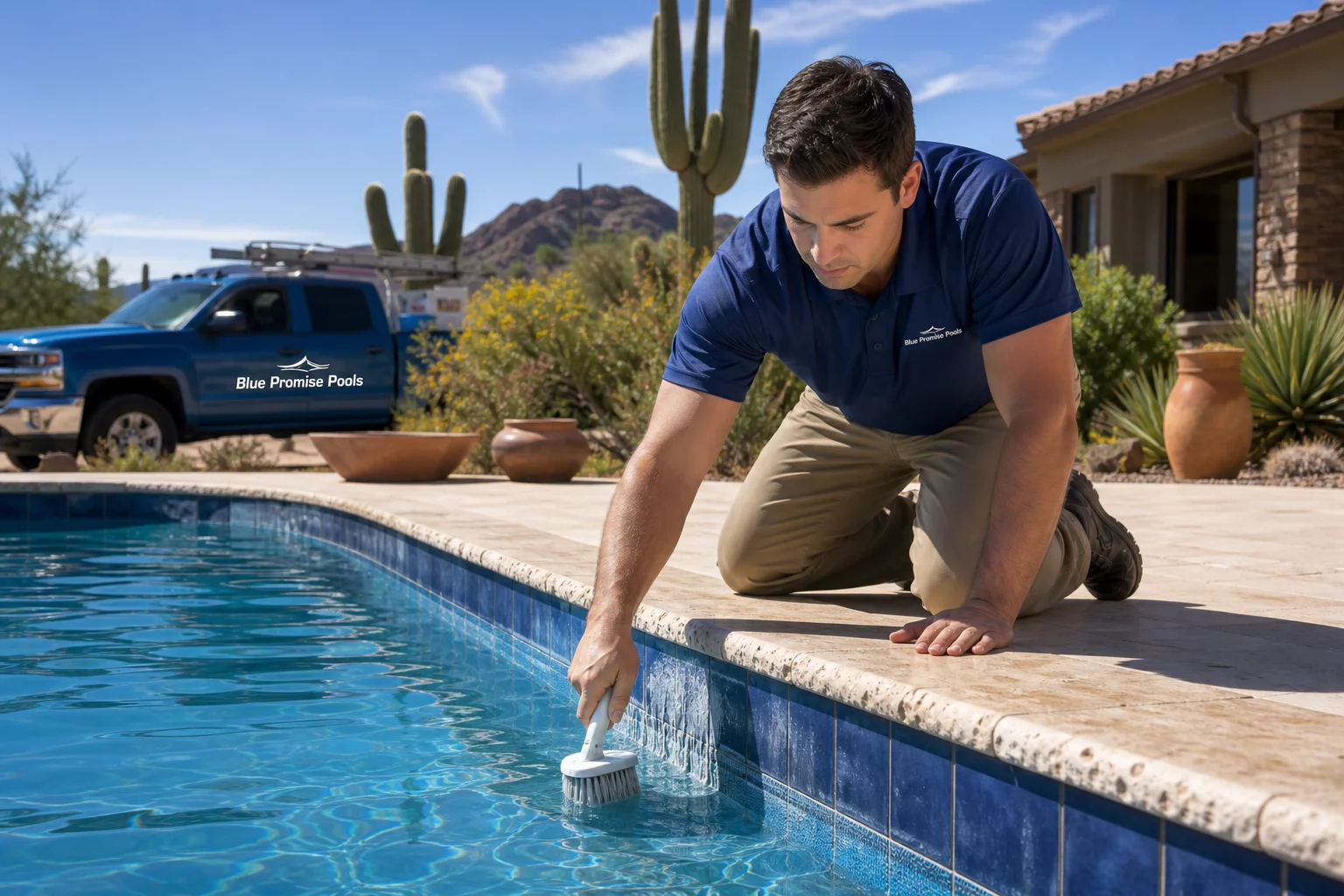
For moderate buildup, a commercial calcium remover applied with a stiff brush works well on most tile types. Follow product directions carefully, since these products often contain mild acid that can shift pool chemistry if overused.
Heavy calcium silicate crust calls for professional-grade bead blasting. A technician directs fine glass beads at the affected area under controlled pressure, lifting even the most stubborn deposits without damaging quality tile surfaces. Pairing this treatment with Weekly Pool Service keeps calcium manageable between visits and prevents scale from hardening into the silicate form in the first place.
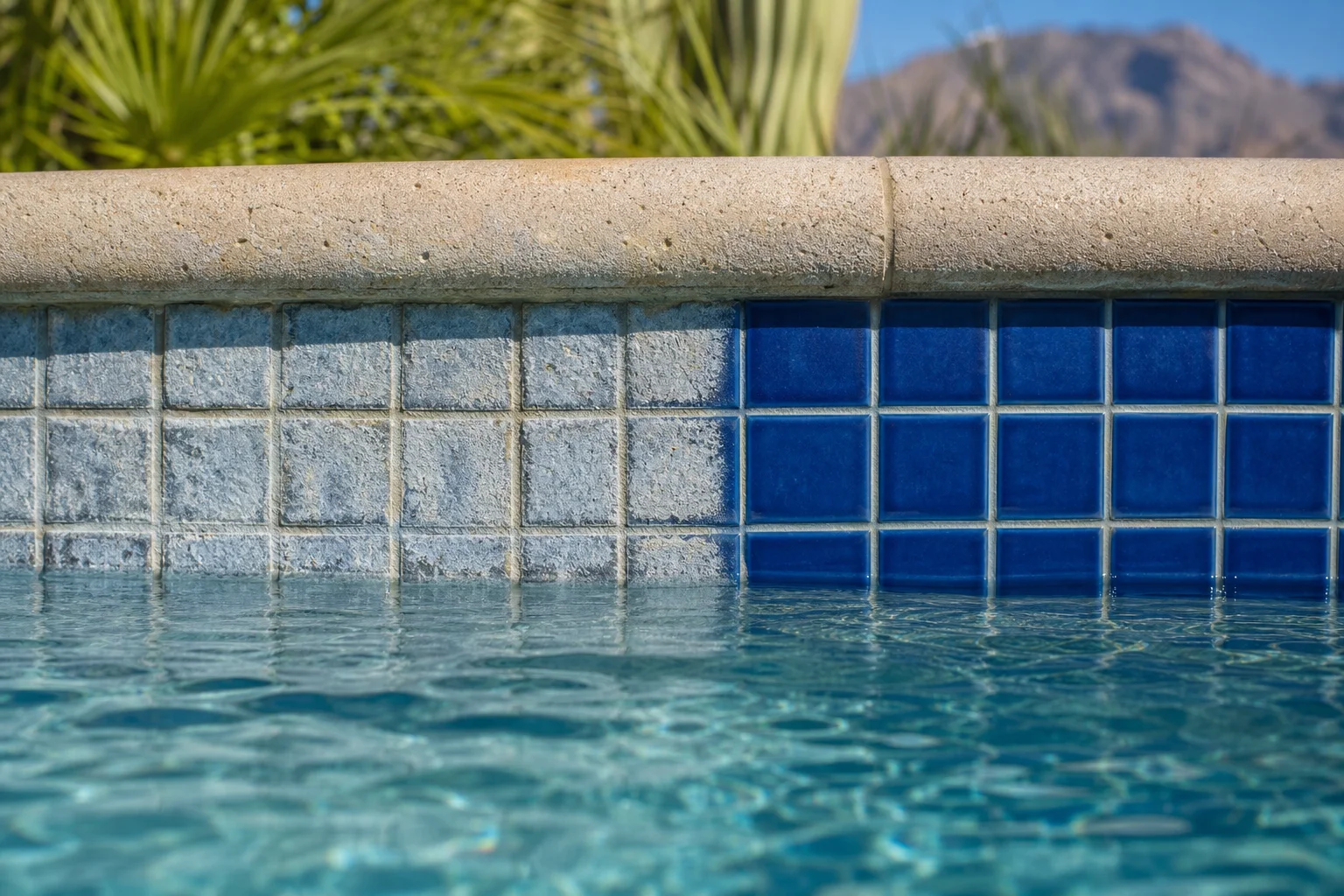
Professional Pool Tile Cleaning and Repair Services in Scottsdale
Professional pool tile cleaning and repair in Scottsdale covers more than surface scrubbing. A trained technician inspects grout integrity, checks tile adhesion, notes cracked or chipped tiles, and evaluates which cleaning method is safest for your tile type. The visit ends with a clear picture of your pool's condition and any repair needs.
Hiring professional cleaning services also protects your investment long term. Calcium that sits on tile for too long etches into the glaze and causes permanent damage. Routine professional cleaning catches scale early, when removal is still straightforward, rather than after significant damage has set in.
How often should you schedule service? In Scottsdale, twice per year is a reasonable baseline for pools with moderate scale. Pools with harder water or heavy summer use often benefit from quarterly visits. Testing your fill water and pool water periodically with a basic hardness test kit shows where you stand, and consistently high readings are the clearest signal it is time to move from a twice yearly schedule to quarterly service.
Weighing professional service against doing it yourself comes down to time and equipment. Pumice and commercial calcium removers handle light buildup on your own schedule, but heavier calcium silicate crust and any grout or adhesion concerns are safer left to a technician with bead blasting equipment and the experience to spot repair needs early.
When Your Pool Tile Needs Repair, Not Cleaning
Pool tile cleaning and repair often go together. What looks like a cleaning job sometimes reveals structural problems underneath. A cracked, chipped, or lifting tile cannot be fixed by cleaning alone.
Individual cracked or chipped tiles from impact or thermal stress are one common scenario. Scottsdale winters can bring cold overnight temperatures, and the swing between daytime heat and nighttime cold stresses tile adhesive over time.
Loose tile sections caused by water infiltrating behind the tile field are another frequent problem. Once water gets behind the tile, it weakens the bonding mortar and damage spreads outward to neighboring tiles.
Grout that has eroded or discolored across large sections also calls for repair rather than cleaning. Regrouting restores the waterproof barrier and keeps pool water where it belongs.
For widespread tile damage, full pool resurfacing is often more cost effective than ongoing patching, since repeated spot repairs on failing tile add up fast. The tradeoff between patching and a full resurface is covered in the resurfacing cost guide.
Frequently Asked Questions
How often should I schedule professional pool tile cleaning?
In Scottsdale, most swimming pools benefit from professional pool tile cleaning once or twice per year. Pools with harder water or heavy summer use may need quarterly service. Consistent chemistry management between visits, keeping pH and calcium hardness within target ranges, extends the time between professional cleanings and keeps tile looking sharp.
Can I safely remove calcium deposits myself?
Light calcium carbonate scale is one type homeowners can safely remove with a pumice stone on wet ceramic or porcelain tile. Avoid pumice on glass tile. For heavier deposits or calcium silicate, professional cleaning services with bead blasting equipment are safer and more effective than DIY chemical treatments, which can damage certain tile types.
How do I know if my tile needs cleaning or repair?
Cleaning addresses surface buildup and discoloration. Repair is needed when tiles are cracked, chipped, loose, or when grout has deteriorated significantly. During any professional pool tile cleaning visit, a technician will flag structural issues that cleaning alone will not resolve, giving you a complete picture of the work needed.
Does chemical tile cleaning affect my pool water?
Yes. Acid-based cleaning products lower pH and total alkalinity. After any chemical cleaning treatment, retest your water and adjust chlorine, pH, and alkalinity accordingly. Professional cleaning services typically rebalance pool chemistry as part of the service, saving you from having to recalibrate on your own after every visit.
What tile types are most common in Scottsdale pools?
Ceramic and porcelain tile are most common for their durability and accessible price point. Glass mosaic is popular in higher-end pools for its visual quality. Each type responds differently to cleaning methods and chemicals, so identifying your tile type before starting any cleaning or repair work is important to avoid surface damage.
Keep Your Scottsdale Pool Tile in Top Condition
Consistent pool tile cleaning and repair protects your pool's appearance, extends the life of your tile and grout, and keeps your Scottsdale pool safe and inviting through every Arizona season. Reach out through our Contact page and we will put together a service plan built around your pool's specific needs.