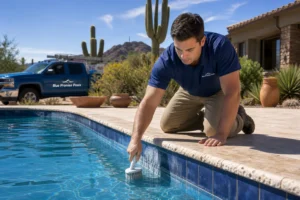
Knowing how to choose the right pool surface material for your Arizona home comes down to three things: climate, comfort, and cost. The right pool finish keeps a swimming pool cool underfoot, resists the desert sun, and holds up for years, so before you sign off on your next Pool Construction project, here's what actually matters.
By Blue Promise Pools Team, Pool Construction Experts
Why Your Pool Surface Material Matters in Arizona's Climate
Arizona summers push pool decks and pool surfaces to extremes that most finish manufacturers never anticipated when their products were designed for milder climates. A pool surface that looks great in a showroom can blister, fade, or turn uncomfortably hot within a single season if it wasn't built for desert sun. Swings between a 115 degree afternoon and a cool desert evening also stress the underlying surface, so durability isn't optional here, it's the baseline. UV exposure alone can fade an unsuitable finish within a couple of seasons, and constant sun combined with chlorinated or salt water accelerates wear on any surface that wasn't matched to the climate in the first place. Homeowners across Scottsdale learn quickly that the wrong finish on an Arizona pool means resurfacing sooner than expected, while the right one stays comfortable underfoot and holds its color for a decade or more. Overall, the surface you choose sets the tone for how much you enjoy your backyard and how much you spend maintaining it, so it pays to think through the options before construction begins rather than after the first signs of wear show up.
Popular Pool Finish Options for Your Backyard Oasis
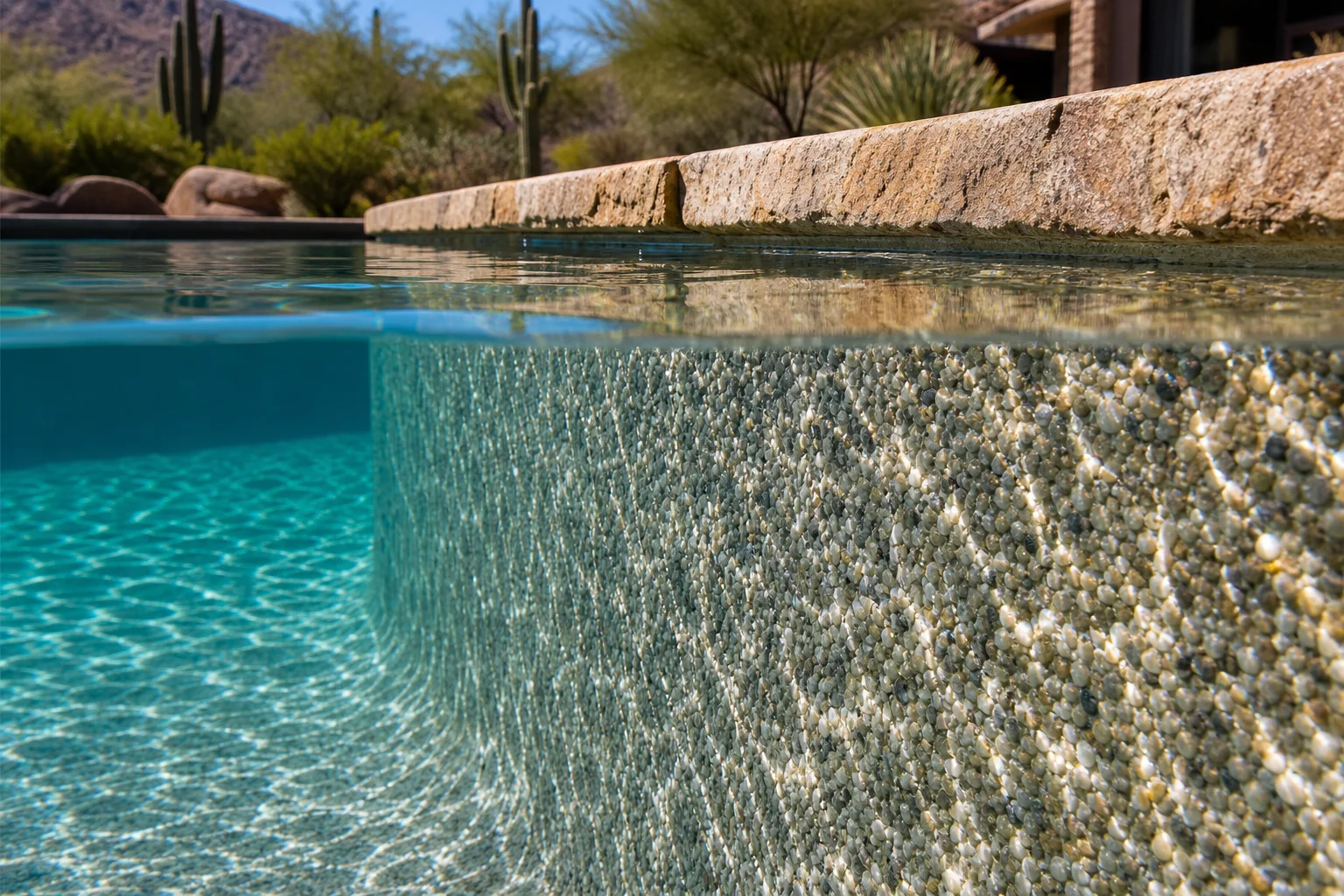
Plaster remains the most affordable option pool owners have relied on for decades, and it's still a solid choice for a first swimming pool build on a tighter budget. Pebble finishes cost more upfront but resist chipping and staining far better, which makes them a popular pick for Arizona backyards that see pool use nine months a year. Quartz aggregate finishes sit in between plaster and pebble, offering a smoother surface with better UV resistance than plain plaster at a moderate price point. Glass tile and imported natural stone finishes round out the higher end, prized for their color depth and long-term durability rather than any single best material for every yard. Beyond upfront cost, it helps to weigh how each finish ages: plaster tends to show etching and discoloration first, pebble hides mineral staining better, and quartz sits somewhere in the middle on both appearance and long-term maintenance needs. Talking through water chemistry habits with your installer can also help you pick a finish that matches how consistently the pool gets balanced and brushed.
Hard water buildup can dull any of these finishes over time, especially in Scottsdale's mineral-heavy supply. Staying ahead of it comes down to consistent brushing and balanced water chemistry, and finishes that do develop scale can usually be brought back with a professional acid wash rather than a full replacement.
Choosing Right Pool Finish for Durability and Comfort
Choosing right finish isn't just about looks. Slip resistance matters most around a pool deck that gets wet dozens of times a day, especially with kids or older family members using the steps. Textured pebble and quartz finishes provide better traction than smooth plaster, which is one reason they've become the standard for new pool builds across the Valley. Surface temperature is another factor worth weighing: darker finishes absorb more heat and can feel hot on bare feet by early afternoon, while lighter, natural tones stay more comfortable through the day, particularly on steps and shallow ledges where people stand still longer. If your family swims daily, a durable, slip-resistant surface pays for itself in fewer accidents and less resurfacing down the road. It's also worth asking your installer how a given finish performs when wet versus dry, since some textures that feel grippy underwater turn slick once the deck dries in the sun. If your current surface is already showing wear, Pool Resurfacing can restore it without a full rebuild.
Pool Deck Materials and Water Features to Consider
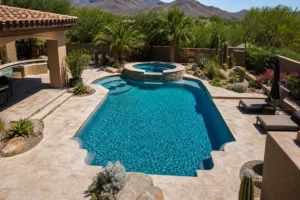
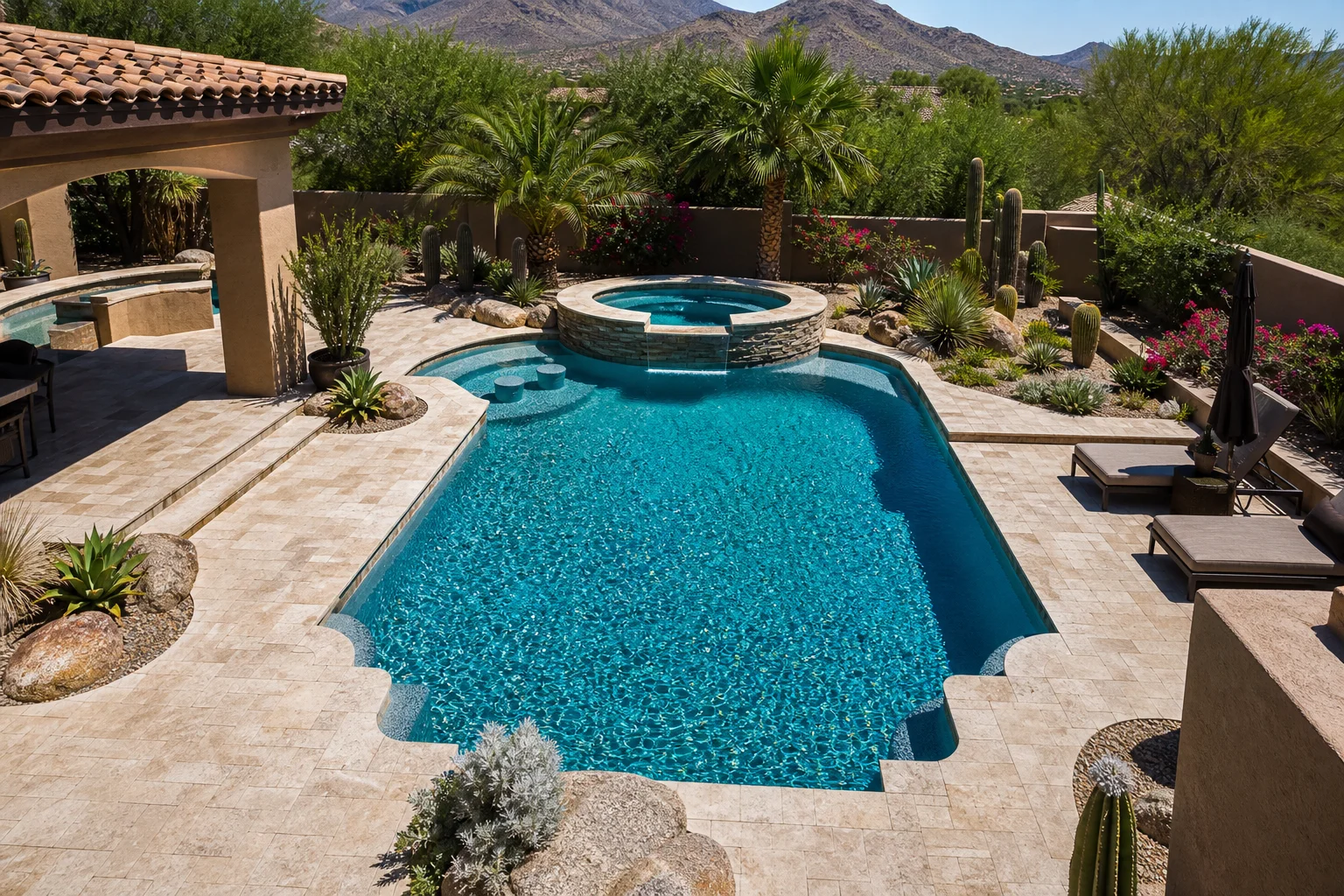
Your pool deck deserves just as much thought as the pool surface itself, since both work together in Arizona's heat. Travertine and other natural stone pavers stay cooler than standard concrete and resist cracking during the temperature swings common in the high desert. Thoughtful pool deck design pairs natural stone or textured concrete with water features that fit your yard's actual scale, rather than crowding a small space with more than it can comfortably hold. Many homeowners also build in water features like sheer descent waterfalls, bubblers, or a raised spa spillover to create an outdoor living space that feels more like a resort than a backyard chore. Coping, the material capping the pool's edge, deserves the same attention as the deck itself, since it takes constant splash exposure and needs to match both the surface finish and the deck material for a cohesive look. Tile bands along the waterline also need occasional attention, since mineral scale tends to collect there even on well maintained pools, and loose or cracked tile is usually far easier to repair early than after years of buildup.
If energy costs are a concern, pairing your new surface with a solar heating system extends your swim season without running up the utility bill overall.
Working with an Experienced Pool Builder
Every finish on this list requires proper installation to perform as advertised, which is why the pool builder you choose matters as much as the material itself. A reputable pool builder will walk you through samples in direct sunlight, not just under showroom lighting, and explain realistic cost ranges before any contract is signed. Ask any pool builder you're considering about warranty terms, curing time before the pool can be filled, and how they handle water chemistry during the first few weeks, since a rushed startup process can shorten the life of even a premium finish. At Blue Promise Pools, our team has installed and resurfaced pool surfaces across Scottsdale for years, and we're happy to talk through what fits your home and budget today. If you're weighing ongoing upkeep against a bigger project, it comes down to how much time you want to spend testing water and brushing yourself versus handing that routine off to a pool service, since either approach works as long as the surface gets consistent care. Explore our full range of Services to see how we support pool owners from first build through years of upkeep. Once your new surface is installed, keeping it looking good over time comes down to routine upkeep, something our annual maintenance checklist covers in more detail.
Frequently Asked Questions
What is the most durable pool finish for Arizona homes?
Pebble and quartz aggregate finishes generally outperform plain plaster in Arizona's climate. They resist chipping, staining, and UV fading better, which matters most on pool decks and surfaces that face direct sun most of the day. Plaster remains a budget-friendly option and still performs well with consistent maintenance, but it typically needs resurfacing sooner than pebble or quartz, especially on pools that see heavy year-round use.
How often does a pool surface need to be resurfaced?
Plaster often needs attention every 7 to 10 years in Arizona's climate, while pebble and quartz finishes can last considerably longer with proper water chemistry and regular brushing. Actual timelines vary based on chemical balance, bather load, and how well the surface was installed in the first place, so two pools with the same finish can age very differently.
Is pebble finish worth the extra cost?
For most Scottsdale homeowners, yes. Pebble finishes cost more upfront than plaster but resist chipping, staining, and fading far longer, which usually offsets the price difference over the life of the pool. It also offers better slip resistance and a more natural look underfoot, and many homeowners find the texture more comfortable for lounging on shallow steps and tanning ledges.
What pool deck material stays coolest in summer?
Light-colored travertine and other natural stone pavers stay noticeably cooler underfoot than standard stamped concrete or dark pavers. Lighter colors reflect more sunlight, which makes a real difference on bare feet during Arizona's hottest months, and a textured finish on the deck also helps with slip resistance around the pool's edge.
Can I add water features when resurfacing an existing pool?
Often, yes. Many water features like deck jets, bubblers, or a small waterfall can be added during a resurfacing project without a full rebuild, though structural changes like raised spas may require additional construction work and permitting. A pool builder can evaluate your specific setup and let you know what's realistic within your existing shell and plumbing.
Get Expert Guidance on Your Arizona Pool Surface
Picking the right finish for your Arizona home doesn't have to feel overwhelming when you have a team that's installed and resurfaced pools across Scottsdale for years. Contact Blue Promise Pools today to talk through the best surface material for your backyard.