Winter Pool Maintenance Guide for Arizona Homeowners: Essential Care and Services in Scottsdale AZ
Winter pool maintenance is important for Arizona homeowners, especially in regions like Scottsdale where the desert climate presents unique challenges. This guide will provide essential insights into maintaining your pool during the winter months, ensuring it remains in good condition.
Homeowners often overlook winter care, leading to potential issues and costly repairs. By understanding the specific needs of your pool during this season, you can prevent problems such as chemical imbalances and equipment stress. This article will cover the importance of winter maintenance, how to maintain proper chemical balance, best practices for protecting pool equipment, and the benefits of using pool covers.
Why Is Winter Pool Maintenance Crucial for Scottsdale Homeowners?
Winter maintenance is important for Scottsdale homeowners to ensure their pools remain healthy and functional. The winter months can bring about various challenges that, if not addressed, can lead to issues. Many homeowners mistakenly believe that pools require little attention during winter, but neglecting maintenance can result in repairs and decreased pool longevity.
What Unique Challenges Does the Arizona Desert Climate Present?
The Arizona desert climate poses several unique challenges for pool maintenance during winter. High evaporation rates can lead to water loss, while dust and debris accumulation can dirty the pool. Additionally, temperature fluctuations can cause chemical imbalances, making regular maintenance important. Homeowners must be proactive in addressing these challenges to maintain a clean and safe swimming environment.
How Does Winter Affect Pool Water Chemistry and Equipment?
Winter can impact pool water chemistry and equipment. Chemical fluctuations are common during colder months, as lower temperatures can affect chlorine levels and pH balance. Furthermore, pool equipment, such as pumps and heaters, may experience stress due to reduced usage and temperature changes. Regular checks and adjustments are necessary to prevent equipment damage and ensure good water quality.
How to Maintain Proper Winter Pool Chemical Balance in Arizona?

Maintaining the proper chemical balance in your pool during winter is important for its health and longevity. Homeowners should regularly test and adjust their pool’s chemical levels to prevent issues such as algae growth and cloudy water.
What Are the Optimal pH, Chlorine, and Alkalinity Levels for Winter?
The optimal chemical levels for winter pool maintenance are important for preventing imbalances. Homeowners should aim for the following ranges:
| Chemical | Optimal Level |
|---|---|
| pH | 7.2 – 7.6 |
| Chlorine | 1 – 3 ppm |
| Alkalinity | 80 – 120 ppm |
Maintaining these levels helps ensure a safe swimming environment and protects pool equipment from damage.
How Often Should Homeowners Test and Adjust Pool Chemicals?
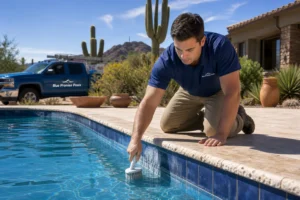
Homeowners should test and adjust their pool chemicals at least once a week during winter. Regular testing helps identify any imbalances early, allowing for timely adjustments.
Signs of chemical imbalance include cloudy water, strong chlorine odors, and algae growth. If homeowners are unsure about testing or adjustments, seeking professional help can ensure proper maintenance.
For those looking for expert assistance, Blue Promise Pools offers comprehensive pool maintenance services tailored to the unique needs of Arizona homeowners. Their expertise in local conditions ensures that your pool remains in good shape throughout the winter months.
What Are the Best Practices for Protecting Pool Equipment During Arizona Winters?
Protecting pool equipment during winter is important to prevent damage and ensure longevity. Homeowners should follow best practices to winterize their pools effectively.
General principles for winterizing pools, regardless of type or equipment, have long been established to guide homeowners in this essential seasonal care.
Winterizing Outdoor Pools: Essential Care Guide
The discussion presented is not tailored to any particular type of pool or equipment, but the principles are applicable to all pools. Although most municipal pools will be drained during the winter, winterizing suggestions are included for those that are not.
Winterizing outdoor swimming pools, 1977
How Can Pool Pumps and Heaters Be Winterized Effectively?
To winterize pool pumps and heaters, homeowners should follow these steps:
- Drain Water: Remove any water from the pump and heater to prevent freezing, although freezing is rare in Scottsdale.
- Clean Filters: Ensure that filters are clean and free of debris.
- Cover Equipment: Use protective covers to shield equipment from dust and debris.
These steps help maintain equipment functionality and prevent repairs.
When Should You Call Professionals for Winter Pool Equipment Service?
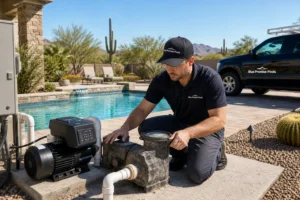
Homeowners should consider calling professionals for winter pool equipment service if they notice signs of equipment failure, such as unusual noises or decreased performance. Professional maintenance can provide peace of mind and ensure that all equipment is functioning correctly.
Blue Promise Pools specializes in winterizing pool equipment, offering expert services to protect your investment.
How Do Pool Covers Benefit Winter Pool Care in Scottsdale?

Using pool covers during winter offers several benefits for Scottsdale homeowners. Covers help maintain water quality and reduce maintenance efforts.
The importance of reducing water loss, particularly through evaporation, is a widely studied topic with various methods explored globally.
Evaporation Reduction Methods for Water Surfaces
Many methods have been tested and developed all over the world to save water from evaporation process. This paper presents a state-of-art review of published research work in the last 14 years (from 2014 to 2018) in which it was focused on the physical, chemical and biological methods of evaporation reduction from water surfaces.
A review of evaporation reduction methods from water surfaces, 2019
What Types of Pool Covers Are Suitable for Arizona Winters?
Several types of pool covers are suitable for Arizona winters, including:
- Safety Covers: These provide protection against accidental falls and debris accumulation.
- Solar Covers: Designed to retain heat and reduce evaporation, solar covers are ideal for cooler winter days.
- Mesh Covers: Allow water to drain while keeping debris out, making them a practical choice for winter maintenance.
How Do Pool Covers Reduce Water Evaporation and Debris?
Pool covers are effective in reducing water evaporation and debris accumulation. Using a cover can reduce evaporation by up to 70-90%, conserving water and reducing the need for refills. Additionally, covers prevent leaves and debris from entering the pool, minimizing cleaning efforts and maintaining water quality.
Indeed, research consistently highlights the significant role of pool covers in mitigating evaporative losses from residential pools.
Reducing Residential Pool Evaporation
Measures, such as installing pool covers, could be introduced to reduce evaporative losses. Further research is needed to quantify the total water loss by evaporation from all outdoor waterbodies (swimming pools and water features) under different climate scenarios.
Evaporation losses from residential swimming pools and water features under climate variability and change, RL Wilby, 2025
By implementing these winter maintenance strategies, Arizona homeowners can ensure their pools remain in good condition throughout the colder months. For those seeking professional assistance, Blue Promise Pools is ready to help with all your pool maintenance needs.