The Ultimate Pool Filter Cleaning Guide for Arizona Pools
Keeping your pool filter clean is crucial for Arizona homeowners because the desert climate creates extra strain on equipment. This guide outlines proven practices for cleaning filters to maintain performance and extend service life. You’ll learn the differences between common filter types, their maintenance needs, and practical methods for cleaning in hot weather. We also cover how regular filter care helps prevent algae and preserve water quality, plus DIY tips and signs that it’s time to call a professional.
Which Pool Filter Types Are Best Suited for Arizona's Desert Climate?
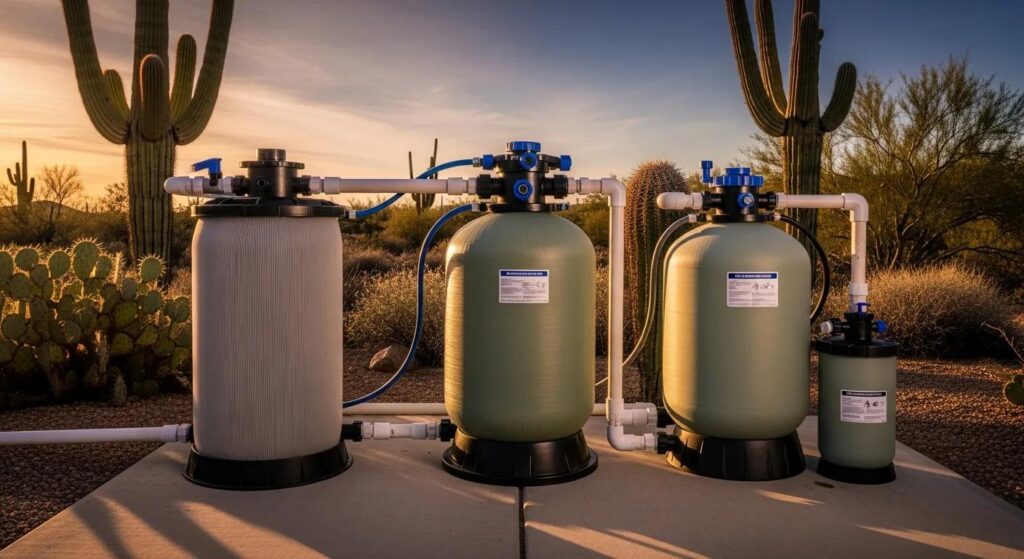
Selecting the right filter matters in a desert climate. Cartridge filters offer easy maintenance and efficient particle capture, making them a common choice for Arizona homes. Sand filters are durable and handle larger debris but need regular backwashing. DE filters deliver the finest filtration but require more careful upkeep. Knowing these differences helps you pick the filter that fits your pool and maintenance preferences.
How Do Cartridge, Sand, and DE Filters Perform in Hot, Arid Conditions?
Filter performance varies in Arizona’s heat. Cartridge filters perform well because they trap fine particles without frequent backwashing. Sand filters can miss finer debris and need more cleaning to stay efficient. DE filters give the best clarity but demand more detailed maintenance in extreme heat. Evaluate each type’s strengths and trade-offs to match your maintenance capacity and water-quality goals.
What Are the Energy Efficiency Benefits of Different Pool Filters in Arizona?
Energy use is an important factor during long, hot summers. Cartridge filters often use less water and energy for cleaning than sand or DE systems. Well-maintained sand filters can be cost-effective despite lower baseline efficiency. DE filters provide superior filtration but may incur higher operating costs due to their maintenance needs. Choosing the right filter helps reduce energy and water waste while keeping your pool clean.
What Are the Step-by-Step Procedures for Cleaning Pool Filters in Hot Weather?
Regular filter cleaning preserves water clarity and system efficiency in hot weather. Follow manufacturer instructions and these standard steps to clean each filter type safely and effectively.
- Turn off the pump: Always ensure the pool pump is off before starting any cleaning process.
- Remove the filter: Carefully take out the filter according to the manufacturer’s instructions.
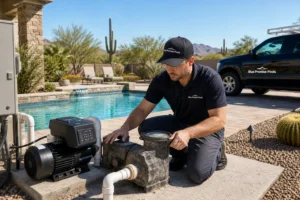
- Clean the filter: For cartridge filters, use a hose to spray off debris and soak in a cleaning solution if heavily soiled.For sand filters, backwash the filter until the water runs clear, then rinse.For DE filters, remove the DE powder and clean the grids with a hose.
- Reassemble the filter: Once clean, reassemble the filter and ensure all parts are secure.
- Restart the pump: Turn the pump back on and check for any leaks.
How to Clean Cartridge Filters Effectively in Scottsdale's Climate
In Scottsdale, clean cartridge filters every 4–6 weeks during high-use months. Remove the cartridge, rinse off loose debris with a hose, and soak in a filter-cleaning solution for a deeper clean. Rinse thoroughly before reinstalling and avoid high-pressure water, which can damage the media. Consistent care preserves performance and extends cartridge life.
What Are the Best Practices for Sand and DE Filter Maintenance?
Follow specific practices to keep sand and DE filters working well. Backwash sand filters when the pressure gauge reads 8–10 psi above normal to clear trapped debris. After cleaning DE filters, replenish the DE powder and inspect grids for tears or damage. Routine checks and maintenance reduce repair risk and keep pool water clean.
How Can Arizona Pool Owners Prevent Algae Growth Through Filter Maintenance?
Warm temperatures accelerate algae growth, so filter maintenance is a frontline defense. Clean, well-functioning filters support consistent circulation and clarity, which limits algae development. Combine filter care with proper water chemistry—balanced pH and correct chlorine levels—to strengthen algae prevention.
What Role Does Regular Filter Cleaning Play in Algae Prevention?
Regular cleaning improves circulation and removes organic material that feeds algae. When filters clog, debris builds up and water circulation suffers, creating conditions that favour algae blooms. A scheduled cleaning routine substantially lowers algae risk and maintains a safer swimming environment.
Which Water Chemistry Parameters Support Algae-Resistant Pools in Desert Areas?
Maintaining correct water chemistry is key to resisting algae. Important targets include the parameters listed below.
- pH Levels: Keeping pH between 7.2 and 7.6 ensures optimal chlorine effectiveness.
- Chlorine Concentration: Maintaining a chlorine level of 1-3 ppm helps kill algae and bacteria.
- Total Alkalinity: Levels between 80-120 ppm stabilize pH and prevent fluctuations.
Test and adjust these levels regularly to maintain an environment that discourages algae growth.
When Should You Choose Professional Pool Filter Cleaning Services in Arizona?
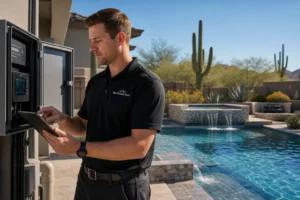
Call a professional when you see clear warning signs: persistent loss of water clarity, a sustained rise in filter pressure, or when a filter hasn’t been serviced for several months. Professional cleaning delivers a thorough service that returns the system to peak efficiency and reduces the chance of recurring problems.
What Are the Advantages of Blue Promise Pools’ Weekly Filter Maintenance?
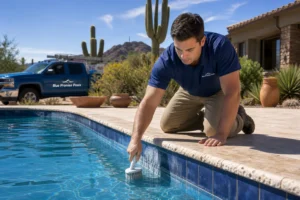
Blue Promise Pools’ weekly filter maintenance keeps water quality steady and saves homeowners time. Their local experience lets them adapt practices to Arizona conditions. Regular service also uncovers small issues early, preventing costly repairs and giving owners reliable, worry-free pool care.
How to Identify Signs That Your Pool Filter Needs Expert Repair or Cleaning
Watch for these common indicators that your filter needs expert attention.
- Cloudy Water: Persistent cloudiness may indicate a filter that is not functioning properly.
- High Pressure Readings: A significant increase in pressure on the gauge can signal a clogged filter.
- Unusual Noises: Strange sounds from the filter system may indicate mechanical issues.
If you observe any of these signs, arrange a professional inspection to diagnose and address the problem promptly.
What Are Practical DIY Pool Filter Cleaning Tips for Arizona Homeowners?
Use these straightforward DIY tips to keep your filter in good shape between professional visits.
- Regular Inspection: Check filters monthly for debris buildup and wear.
- Use the Right Tools: Have a hose, filter cleaner, and soft brush on hand for effective cleaning.
- Follow Manufacturer Guidelines: Always adhere to the specific cleaning instructions provided by the filter manufacturer.
Following these steps helps maintain filter performance and prolongs equipment life.
Which Tools and Materials Are Essential for Safe DIY Filter Cleaning?
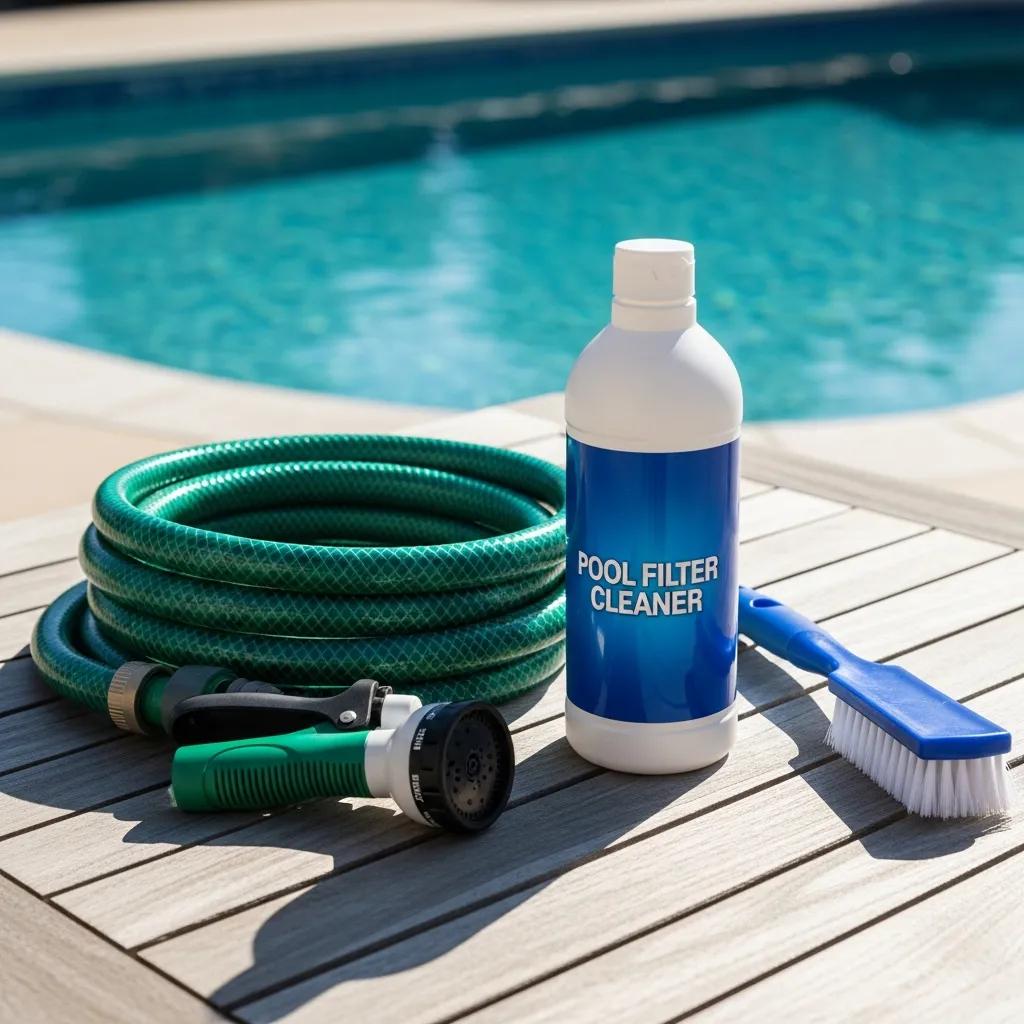
Using the correct tools improves safety and results. Key items to have on hand are listed below.
- Hose: For rinsing off debris and cleaning filters.
- Filter Cleaner: A specialized solution for deep cleaning cartridge filters.
- Soft Brush: To gently scrub filter surfaces without causing damage.
Having these tools ready makes cleaning faster, safer, and more effective.
How Often Should You Clean Your Pool Filter to Maintain Optimal Performance?
Clean your filter every 4–6 weeks during peak swimming season as a baseline. Adjust frequency based on pool use, local debris, and weather. Regular cleaning keeps the filter running efficiently and helps maintain clear, safe water.
Which Energy-Efficient Pool Filters Are Recommended for Desert Pools in 2023?
In 2023, commonly recommended energy-efficient options for desert pools include the filter types listed below.
- Cartridge Filters: Known for their low water usage and ease of maintenance.
- High-Efficiency Sand Filters: Designed to minimize energy consumption while effectively filtering water.
- DE Filters with Enhanced Efficiency: Offering superior filtration while maintaining energy efficiency.
Selecting the appropriate filter can reduce energy and water costs while maintaining clean pool water.
What Are the Latest Industry Statistics on Filter Efficiency and Algae Control?
Industry data show that properly maintained filters greatly improve water clarity and reduce algae risk. Regular cleaning keeps filters near peak efficiency, which supports overall pool health. These findings highlight why routine filter care is a central part of effective pool management.
How to Select and Maintain Energy-Saving Filters for Arizona Pools
Choose energy-saving filters by weighing filter type, energy ratings, and maintenance needs. Opt for models that suit your pool size and local conditions. Regular cleaning and timely parts replacement will preserve efficiency and extend system life.
To further enhance your pool experience, consider exploring contacting us for expert advice and services.
For Arizona residents, maintaining a pristine pool requires consistent effort. That’s why weekly pool service can be a game-changer, ensuring your pool remains in top condition year-round.
Moreover, if you encounter any issues with your pool filter or other equipment, prompt pool repair services are essential to prevent further damage and maintain optimal functionality.