Expert Pool Repair & Seasonal Maintenance in Scottsdale: Keep Your Pool Pristine Year-Round
Blue Promise Pools offers expert pool repair and seasonal maintenance services in Scottsdale, ensuring your residential or commercial pool remains safe, efficient, and ready for enjoyment all year long. This guide covers common repair issues specific to the Scottsdale climate, recommended maintenance schedules, our professional service offerings, essential seasonal care strategies, and how to easily book a complimentary consultation. Scottsdale’s intense UV rays, rapid evaporation, dust, and monsoon weather patterns place unique demands on pool water chemistry and equipment, increasing the risk of repairs if consistent seasonal attention is neglected. You’ll discover how to spot signs of pump, leak, and filter problems, what your weekly and seasonal maintenance should encompass for Scottsdale pools, and when it’s time to call in a professional for repairs or resurfacing. This comprehensive guide is structured into five key sections: common repairs and diagnostics, maintenance frequency, Blue Promise Pools service details, seasonal protection strategies, and steps to request your free consultation. Throughout, you’ll find practical advice and checklists for pool pump repair in Scottsdale, pool leak detection in Scottsdale, weekly pool cleaning in Scottsdale, and seasonal pool maintenance in Scottsdale.
What Are the Most Common Pool Repair Issues in Scottsdale?
The most frequent pool repair issues in Scottsdale stem from the combined effects of equipment wear, imbalanced water chemistry, and environmental stressors that accelerate component degradation and surface damage. High temperatures and intense sunlight increase chlorine consumption and cause pH fluctuations, which in turn can lead to algae blooms and scaling that put a strain on filters and pumps. Rapid water loss, unusual pump noises, and inconsistent filter pressure are common indicators that your pool needs a professional inspection and potential repair. Understanding these typical problems will help you determine when a quick DIY check is sufficient and when it’s best to enlist a professional for accurate diagnostics.
This list highlights the top repair concerns Scottsdale pool owners often encounter and the immediate signs you should watch for.
- Pump malfunctions: Listen for unusual noises, notice reduced water flow, or observe the pump struggling to prime.
- Significant water loss: A persistent drop in water level that exceeds normal evaporation rates.
- Filter and equipment issues: High pressure readings, weak circulation, or malfunctioning valves.
- Water chemistry and algae problems: Cloudy water, noticeable color changes, or recurring algae blooms.
- Surface and structural damage: Visible cracks, peeling plaster, or ongoing, unexplained leaks.
Recognizing these patterns allows you to prioritize necessary repairs and significantly reduces the risk of more extensive and costly damage. The following subsections delve into specific diagnostics for pumps, leaks, and equipment, building logically from these common issues.
How to Identify Pool Pump Problems and Noises

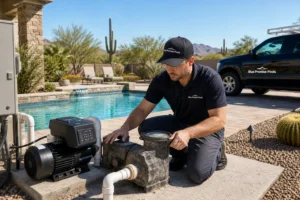
A pool pump nearing the end of its life often signals its distress through distinct sounds and changes in performance, pointing to mechanical or electrical faults. Diagnosing these symptoms is key to deciding whether a repair or a full replacement is the best course of action. Common sounds like whining or grinding often indicate worn bearings or motor issues, while a humming motor might suggest an electrical supply problem or a failed capacitor. Homeowners can perform basic, safe checks, such as verifying the power supply, ensuring baskets are clear of debris, and confirming the pump is properly primed, before scheduling a professional diagnostic. If these noises persist after these initial checks, it’s crucial to have a technician inspect the motor bearings, seals, and impeller condition to prevent further damage and address your pool pump repair Scottsdale needs.
What Causes Rapid Water Loss and How to Detect Pool Leaks
Rapid water loss can be attributed to normal evaporation or, more concerningly, to leaks within the plumbing, fittings, or the pool’s shell. Differentiating between these causes is essential for taking the correct action. A simple bucket test combined with a visual inspection around skimmers, lights, and return lines can help distinguish between evaporation and structural or plumbing leaks. For precise detection, professionals utilize advanced methods like pressure testing, dye testing, and electronic leak detection to pinpoint hidden leaks in underground pipes or the pool structure that DIY methods might miss. Addressing leaks promptly not only conserves water and prevents chemical imbalances but also stops further structural deterioration. This leads us to the broader topic of equipment malfunctions, which often accompany leaks.
How to Recognize Filter and Equipment Malfunctions
Filter and equipment malfunctions typically manifest as abnormal pressure readings on your gauge, reduced water circulation, or an increased frequency of backwashing. These signs often indicate clogged filters, failed valves, or worn-out components. A pressure gauge that consistently rises during normal operation usually points to a clogged filter, whereas unusually low pressure might suggest suction-side issues or blocked lines. Homeowners should note any unusual gauge patterns and visually inspect accessible plumbing and valves. However, persistent irregularities warrant a professional inspection to accurately test flow rates and valve functionality. Timely equipment maintenance is vital to prevent accelerated wear on your pump motor and filter, complementing the broader maintenance schedule discussed in the next section.
How Often Should You Schedule Seasonal Pool Maintenance in Scottsdale?
Seasonal pool maintenance in Scottsdale should be built upon a foundation of weekly service, with intensified attention during key periods to counteract the impacts of heat, dust, and monsoons that stress chemicals and equipment. Regular weekly visits are crucial for skimming, basic vacuuming, chemical testing, and equipment checks to maintain balanced water and stable circulation under intense UV exposure and high evaporation rates. Monthly or seasonal visits should include more thorough filter cleanings, equipment calibration, and surface inspections, strategically timed before the peak summer season, during monsoon periods, and for winter transitions. Establishing this proactive schedule significantly reduces the need for emergency repairs and extends the lifespan of your equipment by addressing Scottsdale’s unique environmental demands.
Weekly maintenance for Scottsdale pools encompasses essential tasks that prevent the common issues previously described, ensuring your pool remains in top condition.
- Skim the water surface and brush walls, including the tile line.
- Vacuum any settled debris and check pump strainer baskets for obstructions.
- Test and adjust water chemistry, focusing on pH, chlorine, and alkalinity levels.
- Inspect filter pressure and visually check plumbing for any signs of leaks.
Adopting a consistent weekly cadence for these tasks helps prevent minor issues from escalating into costly repairs for your pump or the need for resurfacing. The table below outlines recommended maintenance frequencies and the specific tasks included for Scottsdale pools.
| Service Package | Tasks Included | Recommended Frequency (Scottsdale) |
|---|---|---|
| Weekly Pool Cleaning | Skim, brush, vacuum, test chemicals, empty baskets | Weekly |
| Basic Tune-Up | Filter rinse, valve check, equipment inspection | Monthly |
| Seasonal Service | Deep clean, shock, chemical recalibration, pre-/post-storm checks | Before summer and before/after monsoon |
| Winter Stabilization | Chemical stabilization, reduced circulation plan | Annual (late fall) |
What Does Weekly Pool Cleaning Include for Scottsdale Pools?
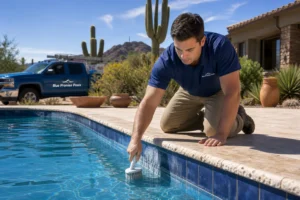
Weekly pool cleaning for Scottsdale pools involves a comprehensive set of tasks designed to minimize algae risks and reduce strain on equipment by maintaining crystal-clear water and consistent circulation. Standard procedures include skimming surface debris, brushing pool walls and tile, vacuuming settled debris, testing and balancing water chemistry, and emptying pump and skimmer baskets to ensure optimal flow. Technicians also monitor filter pressure and note any system irregularities that might signal early-stage repair needs, allowing for prompt follow-up. Consistent weekly service is the cornerstone of effective seasonal maintenance and seamlessly integrates with our professional service packages.
How Does Scottsdale's Climate Affect Pool Water Chemistry?
Scottsdale’s intensely sunny and hot climate accelerates the breakdown of chlorine and causes pH levels to rise due to UV-driven reactions. Furthermore, the region’s mineral-rich hard water can encourage calcium scaling, impacting both pool surfaces and equipment. Elevated temperatures significantly increase sanitizer demand and can alter alkalinity and calcium hardness parameters, necessitating more frequent testing and adjustments than in cooler climates. Dust and debris from monsoon storms introduce organic loads that deplete chlorine and promote algae growth, making proactive treatment and diligent filtration maintenance absolutely essential. Understanding these climate-specific effects is key to implementing preventative chemical balancing that minimizes repair needs and surface deterioration.
What Are the Benefits of Regular Chemical Balancing and Algae Prevention?
Consistent chemical balancing and proactive algae prevention are crucial for maintaining swimmer safety, protecting your pool’s components, and reducing long-term repair expenses. By avoiding corrosive or scaling conditions, you safeguard your equipment and surfaces from damage. A planned regimen of regular testing, targeted shocking, and periodic algaecide application effectively prevents outbreaks that can clog filters and require extensive cleanups. Maintaining proper calcium hardness and pH levels also prevents plaster etching and scaling, which can lead to costly resurfacing or crack repairs. Therefore, diligent chemistry control directly lowers the incidence of common repairs and supports the seasonal care strategies we’ll discuss next.
What Professional Pool Repair Services Does Blue Promise Pools Offer in Scottsdale?
Blue Promise Pools provides specialized services tailored to the unique challenges faced by Scottsdale pools, addressing persistent issues driven by the local climate. Our offerings include expert Pool Repair, comprehensive Pool Maintenance, dedicated Seasonal Pool Care, and precise Pool Leak Detection. Our services encompass detailed diagnostic inspections, guidance on pump repair and replacement, leak detection using advanced pressure testing, and thorough resurfacing assessments to determine the best course of action for crack repair or full resurfacing. We offer complimentary consultations and service packages as the ideal starting point for homeowners and commercial clients seeking personalized diagnostics and effective repair plans. Below, you’ll find a breakdown of common repair services, their typical symptoms, and recommended repair actions, along with estimated cost ranges to help you understand potential project scopes.
| Service | Typical Symptom | Repair Actions & Estimated Cost Range |
|---|---|---|
| Pool Pump Repair | Noisy pump, low flow, failure to prime | Bearing or seal replacement, motor repair, potential replacement (cost varies significantly) |
| Pool Leak Detection | Persistent water loss exceeding normal evaporation rates | Dye testing, pressure testing, plumbing line repair, or structural patching |
| Pool Resurfacing | Peeling plaster, widespread hairline cracks, rough surface texture | Localized spot repairs or complete resurfacing options, with lifecycle cost estimates provided |
| Filter & Valve Repair | High pressure readings, low flow, leaking valves | Cartridge or DE filter cleaning, valve rebuilding, pressure gauge recalibration |
This detailed service breakdown illustrates how Blue Promise Pools aligns its repair workflows with the specific needs of Scottsdale pool owners. The following subsections provide in-depth explanations of our typical pump repair, leak detection, and resurfacing processes.
How Does Pool Pump Repair Scottsdale Work?
Our pool pump repair process begins with thorough technician diagnostics to evaluate the electrical supply, motor condition, impeller wear, and seal integrity, guiding the decision between repair and replacement. Common repair actions include replacing worn bearings or seals, cleaning or replacing the impeller, and testing capacitors or motor windings. Replacement is generally recommended when the cost of repair approaches that of a new unit. Typical timelines can range from same-day part replacements for minor issues to multi-day scheduling for replacements requiring specific parts to be sourced. Clear communication regarding expected outcomes and timelines ensures homeowners are well-informed and helps prevent the escalation to more costly equipment failures.
What Is Included in Pool Leak Detection and Repair?
Professional pool leak detection employs a combination of visual inspection, dye testing, pressure testing of plumbing lines, and advanced electronic leak detection methods to precisely locate leaks that aren’t immediately visible. Once a leak is identified, repairs may involve excavating and splicing plumbing lines, resealing light niches or fixtures, or structurally patching cracks in the pool shell. Following the repair, post-repair verification testing is conducted to confirm the leak has been successfully remediated. Our technicians provide a detailed repair estimate and recommend a follow-up testing schedule to ensure the leak repair remains effective over time. Customers receive comprehensive documentation of findings and guidance on preventative measures to minimize the risk of recurrence.
When Is Pool Resurfacing or Crack Repair Necessary?
Resurfacing or crack repair becomes essential when surface deterioration, persistent minor leaks, or significant scaling create ongoing maintenance challenges, detract from the pool’s appearance, or pose structural concerns. Visible signs include peeling plaster, widespread etching, or hairline and structural cracks that persist even after chemical stabilization and minor repairs. Repair options range from targeted spot repairs for localized damage to a complete resurfacing for aging pool shells, with the decision based on expected lifespan and long-term cost-effectiveness. Properly timed resurfacing not only restores the pool’s watertight integrity and enhances its aesthetic appeal but also extends the interval before the next major intervention is required.
How Can Seasonal Pool Care Protect Your Scottsdale Pool Year-Round?

Seasonal pool care with Blue Promise Pools involves applying targeted checklists and strategic timing to mitigate the peak stresses associated with Scottsdale’s distinct weather cycles—intense summer heat, unpredictable monsoon storms, and mild winter transitions. This proactive approach minimizes the need for emergency repairs and significantly preserves the lifespan of your pool equipment.
Essential summer preparation steps are designed to optimize your pool for the high-usage months and reduce heat-related chemical imbalances and equipment strain.
- Thoroughly inspect and service pumps, filters, and skimmers before the heavy summer use begins.
- Establish stable baseline chemical levels and implement a consistent shock schedule for peak usage periods.
- Ensure effective debris control measures are in place and maintain consistent filtration run times.
These summer-focused actions help prevent emergency repairs during the hottest months and seamlessly transition into the monsoon preparedness steps we’ll cover next.
What Are the Essential Steps for Summer Pool Preparation in Scottsdale?
Summer preparation involves a comprehensive equipment inspection, establishing baseline chemical balances, performing thorough filter cleanings, and implementing debris-prevention strategies to minimize algae risks during periods of high temperatures. Our technicians meticulously verify pump seals, test heaters and automation systems if applicable, and set recommended circulation schedules to ensure consistent sanitizer distribution. Establishing a proactive shock and maintenance cadence before increased usage prevents water clarity issues and reduces the overall load on your filtration systems. These pre-season steps are directly instrumental in preventing common problems like pump overload and recurring algae, which often lead to repair calls.
How to Manage Pool Care During Monsoon Season in Scottsdale?
Monsoon season demands careful preparation, including securing loose equipment before storms, removing potential debris hazards, and having a clear plan for rapid post-storm recovery. This plan should include boosting filtration and applying shock treatments to counteract sudden increases in organic load. After storms pass, prompt skimming, filter cleaning, and chemical rebalancing are crucial to restore water quality and prevent algae from taking hold and clogging your systems. For significant storm impacts or heavy sediment infiltration, professional cleanup and inspection are vital to prevent long-term damage to pumps and surfaces. Timely post-storm actions significantly shorten recovery time and reduce the likelihood of needing extensive, repair-intensive interventions.
Why Is Winterization Important Even in Mild Scottsdale Winters?
Even in Scottsdale’s mild winter climate, a degree of winterization is beneficial to stabilize water chemistry, appropriately reduce circulation, and protect equipment from overnight temperature fluctuations and decreased usage. Chemical stabilization and adjusted run schedules help prevent algae growth and chemical imbalances during cooler nights, making spring startup smoother and avoiding costly restoration efforts. Minimal winterization also includes securing pool covers and verifying that automation and chemical feeders are correctly set for reduced operational demands. These preventative steps minimize potential spring repair needs and ensure a seamless return to full-season service.
How Can You Request a Free Consultation for Pool Repair and Maintenance in Scottsdale?
Requesting a free consultation is a simple process: gather basic details about your pool, describe any observed issues, and schedule an appointment for an intake that leads to a diagnostic visit and a detailed written estimate. During your consultation, expect a thorough intake evaluation, remote guidance where applicable, and an on-site diagnostic assessment that may include pressure testing, pump evaluation, and water chemistry analysis. Blue Promise Pools offers complimentary consultations and tailored service packages for both residential and commercial clients, designed to translate diagnostic findings into prioritized repair and maintenance plans. The checklist below outlines the information you should prepare to expedite the diagnostic process and enhance estimate accuracy.
| Information to Prepare | Why It’s Needed | How It Helps Diagnostic |
|---|---|---|
| Pool type & size | Establishes the overall scope of work | Informs equipment capacity requirements and parts estimates |
| Equipment make/model (if known) | Guides parts compatibility and sourcing | Speeds up repair planning and cost projection |
| Symptoms & timeline | Helps pinpoint the root cause of the issue | Directs diagnostic tests and helps determine urgency |
| Photos or short video | Provides visual context for remote triage | Reduces the time needed for on-site diagnosis |
Collecting this information in advance of your consultation will lead to faster diagnoses and more precise estimates. The steps below detail how to request a consultation and what to expect during the Blue Promise Pools process.
What Information Should You Prepare for Your Pool Service Consultation?
Prepare concise details that facilitate an efficient remote intake and an accurate on-site assessment: include your pool type and size, recent symptoms and their duration, equipment brands or visible model numbers, and any photos or videos illustrating noises, leaks, or cloudy water. Providing information on recent maintenance history and any recent chemical treatments offers valuable context, helping to clarify whether issues stem from seasonal fluctuations or equipment failure. This input allows our technicians to prioritize the most appropriate diagnostic tests upon arrival and to estimate parts or service time more reliably. Gathering these items streamlines the consultation process and helps homeowners effectively compare our service package options.
How Does Blue Promise Pools Assess and Diagnose Pool Issues?
Blue Promise Pools employs a structured diagnostic workflow that begins with a remote intake and preliminary guidance, followed by a meticulous on-site inspection. This inspection utilizes pressure testing, comprehensive pump and electrical diagnostics, and detailed water chemistry analysis to pinpoint the root causes of any issues. Our technicians then produce a documented diagnosis and a prioritized repair estimate, clearly explaining repair versus replacement options and expected timelines. Following the diagnosis, we recommend specific preventive actions and ongoing maintenance schedules designed to minimize the risk of recurrence. This thorough process ensures clarity for homeowners and empowers them to make informed decisions about their repair investments.
What Are the Typical Costs and Service Packages for Scottsdale Pool Repair?
Typical service packages in Scottsdale range from routine weekly pool cleaning plans to comprehensive seasonal care bundles and specialized repair engagements. Costs naturally vary based on pool size, accessibility, and the specific parts required. Our Weekly Pool Cleaning packages and Water Chemistry Balancing plans are designed to address routine needs, while repair engagements, such as pump replacement or leak repair, are quoted individually after diagnostic testing to accurately reflect the necessary parts and labor. Factors influencing the final cost include the complexity of underground plumbing, the availability of specific replacement parts, and the extent of any required resurfacing. Understanding these cost drivers is essential for homeowners to budget effectively and select the appropriate service tier for maintaining long-term pool health.