Revitalize Your Scottsdale Pool: Expert Resurfacing Services Explained
Pool resurfacing is your key to restoring your pool’s interior, fixing damage, giving it a fresh look, and extending its lifespan. This guide will walk you through everything you need to know about pool resurfacing services right here in Scottsdale. You’ll discover how to tell when your pool needs this service, explore popular finish options, understand the typical resurfacing process, and get a clear picture of what influences costs for Scottsdale projects. Many pool owners deal with rough plaster, stubborn stains, and constant water chemistry headaches. Resurfacing solves these by replacing the old surface, boosting chemical resistance, and sealing up any weak spots. We’ll guide you through the entire decision journey: the advantages of resurfacing, the tell-tale signs your pool needs it, a breakdown of finishes (like plaster, Pebble Tec, quartz, aggregate, and fiberglass), a realistic timeline for the work, and the factors that affect pricing for Scottsdale homes. We’ve naturally incorporated keywords like “swimming pool resurfacing Scottsdale,” “pool resurfacing cost Scottsdale,” and “Pebble Tec vs plaster” to help you make smart choices and feel confident when talking to contractors.
Why Choose Blue Promise Pools for Pool Resurfacing in Scottsdale? The Top Benefits
Resurfacing gives your pool a smooth, sealed surface that’s tougher, looks better, and is safer to enjoy. It fixes surface flaws, brings back texture, and applies finishes that stand up better to the sun and pool chemicals. Essentially, a new finish layer replaces worn-out plaster and aggregates, preventing water from seeping in and sealing tiny cracks that lead to faster wear. The outcome? A pool that lasts longer, has fewer chemical issues, and boasts a modern look that complements your home. You can expect less frequent maintenance and clearer water after a professional resurfacing job, making it a smart investment for any desert home.
Resurfacing with Blue Promise Pools also presents a fantastic chance to upgrade to finishes that can handle Arizona’s intense sun and hard water, leading us to how it specifically boosts your pool’s durability and appearance.
Boosting Your Pool's Durability and Style with Resurfacing

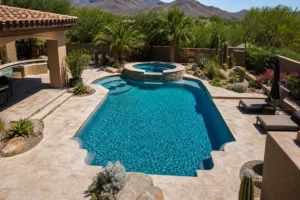
Resurfacing enhances durability by applying a new, resilient surface or aggregate finish that resists scratches and chemical damage. It also elevates appearance by masking old stains and offering fresh color and texture options. A repaired surface stops small cracks from spreading, while aggregate finishes like pebble blends provide superior resistance to wear and tear. Visually, you’ll enjoy consistent color, clearer water thanks to smoother surfaces, and a refreshed aesthetic that ties into your overall backyard design. Considering these performance advantages will help you choose a finish that aligns with your long-term maintenance and style goals.
These improvements in durability and appearance make choosing the right finish for Arizona’s climate crucial. Let’s dive into why Scottsdale’s desert conditions require special consideration.
Why Scottsdale's Desert Climate Makes Resurfacing Essential
The intense Arizona sun and significant daily temperature shifts can quickly degrade traditional plaster finishes, causing fading, thermal cracking, and chemical breakdown. This makes resurfacing a necessary maintenance step. The combination of high UV exposure and hard water can etch softer finishes and lead to staining. Aggregate finishes and quartz blends generally offer better protection against UV rays and chemical imbalances. By selecting finishes with binders that are proven to resist UV and chlorine, you can significantly reduce premature wear. Resurfacing is the perfect opportunity to switch to materials that are better equipped to handle Scottsdale’s harsh sun and mineral-rich water. Understanding these environmental challenges will help you prioritize finishes that minimize future repair needs.
Choosing finishes suited for Arizona directly impacts your property’s value and safety, which we’ll explore next.
Enhancing Property Value and Safety Through Pool Resurfacing
A beautifully resurfaced pool significantly boosts curb appeal and makes your home more attractive to potential buyers, signaling meticulous upkeep. Safety is also improved by eliminating rough plaster surfaces and trip hazards, and by opting for textures that offer better grip. Smooth, consistent finishes reduce the risk of injuries and the need for constant touch-ups. A visually appealing pool is a major selling point in Scottsdale neighborhoods where outdoor living is highly valued. Resurfacing also provides a chance to incorporate safety upgrades like improved coping or integrated lighting, enhancing both usability and perceived value. Recognizing these benefits for resale and liability can help you prioritize resurfacing over simple cosmetic fixes.
These enhancements to value and safety naturally lead to a crucial question: how do you know when resurfacing is truly necessary? The following section outlines clear indicators.
Spotting the Signs: When Your Scottsdale Pool Needs Resurfacing
Recognizing the signs of surface wear allows you to schedule resurfacing before minor issues become major problems. Common indicators include visible cracks, a rough surface texture, persistent stains, and ongoing difficulties in maintaining balanced water chemistry. These symptoms stem from surface degradation—the loss of binder, exposure of aggregates, or the formation of micro-cracks—which exposes the underlying structure and makes it prone to staining and leaks. Addressing these issues early can prevent more extensive structural repairs and reduce long-term costs by tackling problems while the substrate is still largely intact. Use the checklist below to identify potential issues and prepare for a contractor’s assessment.
Here are common visible and performance-related signs to look out for:
- Visible cracks, peeling, or sections of the finish detaching, revealing the underlying material.
- Stubborn stains or discoloration that don’t disappear with regular chemical treatments.
- A rough, scaled, or abrasive feel on the pool surface, indicating plaster erosion.
These observable signs should prompt a thorough inspection or a professional evaluation to determine if repair or a full resurfacing is the best course of action.
Identifying Cracks, Stains, and Rough Pool Surfaces: A Closer Look
Inspect your pool visually and by touch. Run your hand along steps and benches to feel for roughness. Look closely for hairline cracks versus larger, more serious ones. You can test stains with a mild acid spot treatment to see if they lift. Hairline cracks are often just cosmetic, but wider cracks or areas where water seems to be lost might point to structural issues that require more than a simple surface patch. Some stains from metals or organic matter can be treated chemically, but deep or persistent stains usually mean the finish has become porous and could benefit from resurfacing. Keep a record of your findings, perhaps with photos, to track changes over time and share with contractors for accurate quotes.
Accurate diagnosis is also key to deciding between a repair or a full replastering, which we’ll discuss next.
Repair vs. Replastering: When to Make the Switch
Minor, isolated damage like small chips or superficial etching can often be fixed with targeted repairs. However, widespread crazing, multiple cracks, or pervasive staining typically signal that a full replastering or resurfacing is the better option. Consider replastering when more than a small portion of the surface shows wear, if you’re experiencing leaks, or if previous repairs have been frequent and costly. The remaining lifespan of your current finish and your long-term plans for the property (selling, upgrading, or staying put) should guide your decision. A professional estimate will clarify whether a localized repair or a complete resurfacing offers the best long-term value.
Water chemistry plays a critical role in how long your pool surface lasts, so assessing your water balance is essential before deciding on repairs.
How Water Chemistry Impacts Your Pool Surface's Lifespan
Your pool’s water chemistry—specifically pH, total alkalinity, calcium hardness, and sanitizer levels—directly influences how quickly your finish erodes. Low calcium and acidic pH can etch plaster, while significant swings in sanitizer levels can accelerate wear and cause discoloration. Hard water minerals can lead to scaling, which masks surface imperfections and hides early signs of damage. Fluctuating chlorine levels can weaken the binders in certain finishes over time. Consistent chemical maintenance and periodic professional balancing will extend the life of your finish. A resurfacing project is the perfect opportunity to establish best practices for water chemistry. Adhering to a regular service schedule will reduce the likelihood of your new finish experiencing premature wear.
Understanding these signs and the impact of water chemistry leads homeowners to consider which finish is best suited for Scottsdale’s unique conditions. The next section compares the most popular options.
Choosing the Right Pool Finishes for Scottsdale Pools

Selecting the ideal finish involves balancing cost, durability, texture, and maintenance needs, all while considering Scottsdale’s intense UV rays and mineral-rich water. Popular choices include traditional plaster, aggregate finishes like Pebble Tec, quartz blends, and fiberglass recoats. The key difference lies in their composition: plaster is cement-based and budget-friendly but softer; aggregate finishes embed pebbles or quartz for enhanced durability; and fiberglass provides a smooth, seamless shell with distinct repair characteristics. Choosing the right finish can improve UV resistance, simplify maintenance, and align texture with your safety preferences. The table below offers a comparison of cost, lifespan, texture, and maintenance to help guide your decision.
Plaster, Pebble Tec, and Quartz: Weighing the Pros and Cons
Plaster is the most budget-friendly upfront but has a shorter lifespan and is more sensitive to pH and water hardness. Pebble Tec, an aggregate finish, offers exceptional durability and a natural look, along with superior resistance to UV and chemicals, but at a higher initial cost. Quartz blends fall between plaster and aggregate in terms of price and lifespan, providing a smoother texture with better resistance than plain plaster. For Scottsdale pools exposed to intense sun and hard water, aggregate or quartz finishes typically mean less frequent resurfacing down the line. Carefully weighing these pros and cons will help you select a finish that fits your budget and long-term maintenance strategy.
Comparing aggregate and fiberglass finishes will further clarify their performance in our climate.
Aggregate vs. Fiberglass: Performance in Arizona's Climate
Aggregate finishes are more resistant to UV damage and chemical wear than basic plaster because their exposed pebbles and dense binders reduce surface porosity. Fiberglass recoats create a smooth, non-porous surface that simplifies cleaning but requires specific substrate preparation and repair techniques. Aggregate handles temperature fluctuations and mineral-rich water exceptionally well. Fiberglass offers quick cleaning and is less prone to staining, although localized repairs can be more complex. Installation requirements also differ: aggregate needs skilled application for a uniform look, while fiberglass recoats depend heavily on the condition of the underlying substrate. Your choice between them will depend on your preferred texture, how you approach repairs, and your long-term maintenance plans.
To determine the best value, consider both lifecycle costs and expected performance.
Which Pool Finish Delivers the Best Value and Longevity?
When you factor in lifespan and reduced maintenance over time, aggregate or Pebble finishes typically offer the best value in Scottsdale. Plaster is a cost-effective choice for initial budgets but often needs replacement sooner. The total cost of ownership includes the initial price, how often you’ll need to resurface, and ongoing maintenance efforts. Aggregate finishes reduce the frequency of future resurfacing and better withstand the impacts of UV and chemicals. If low upkeep and long-term durability are your priorities, aggregate or premium quartz blends are excellent choices. For those focused on minimizing upfront expenses, plaster is an option, but be aware of its shorter lifecycle costs. Aligning your finish selection with your lifestyle and resale plans will ensure the best long-term value.
Now that you’ve explored the finishes, let’s look at the actual resurfacing process and the timeline you can expect.
The Pool Resurfacing Process in Scottsdale: What to Expect
The typical resurfacing process begins with an inspection and estimate, followed by draining the pool, preparing the surface (which may include repairs, acid washing, or shot-blasting), applying the new finish, allowing it to cure, refilling the pool, and rebalancing the water chemistry. Each step is crucial for ensuring proper adhesion, substrate integrity, and the long-term performance of the finish. The process is sequential: the substrate must be perfectly prepped for the new finish to bond correctly, the chosen finish is applied evenly, and it’s allowed to cure fully before being exposed to the full range of water chemistry. Following this sequence helps prevent issues like delamination or premature etching and sets realistic expectations for downtime and cost. Homeowners should be prepared for site access needs, potential dust, and temporary disruptions to pool equipment.
Here’s a step-by-step breakdown to guide your expectations and responsibilities:
- Inspection & Written Estimate: Your contractor will thoroughly assess the pool’s surface condition and identify any necessary repairs.
- Draining & Surface Preparation: The pool is emptied, any needed repairs are made to the substrate, and the surface is cleaned to ensure optimal adhesion.
- Finish Application: A skilled crew applies your chosen finish according to the manufacturer’s precise specifications.
- Curing & Refill: The new finish cures for the manufacturer-recommended period before the pool is refilled and the water chemistry is rebalanced.
This process clarifies homeowner roles, such as ensuring clear access to the pool area and protecting nearby landscaping during the work.
| Stage | Typical Duration | Notes |
|---|---|---|
| Inspection & Quote | 1 day | Defines the project scope and necessary repairs |
| Draining & Prep | 1–3 days | Includes repairs, acid wash, or blasting |
| Finish Application | 1–3 days | Varies based on finish type and pool complexity |
| Curing & Refill | 3–14 days | Curing times differ by material; chemical rebalancing is essential |
These stages indicate that the total project duration can range from a few days to a couple of weeks, depending on the extent of repairs and the chosen material. Clear communication at each stage helps ensure a predictable outcome.
At Blue Promise Pools, we follow a meticulous step-by-step process and provide detailed service reports at every milestone to keep you informed and document the work performed.
From Draining to Balancing: The Resurfacing Stages
After draining and repairing the surface, the substrate is meticulously prepared. Then, the chosen finish is applied with precision, ensuring consistent coverage by skilled technicians. Once the finish has cured, the pool is refilled slowly, with chemicals added in stages to prevent thermal or chemical shock. Contractors typically conduct adhesion tests and inspect for any imperfections before the curing process begins. Homeowners should expect a gradual process of chemical balancing to restore pH, alkalinity, and calcium hardness. This controlled approach prevents damage to the new finish and minimizes the risk of post-installation staining or etching. Clear communication regarding refill timing and startup procedures is key to avoiding common issues after resurfacing.
Careful scheduling can minimize downtime, but it’s important to have an idea of the project’s overall length, which we’ll cover next.
How Long Does Pool Resurfacing Typically Take?
A standard resurfacing project usually takes about a week for a straightforward plaster job, extending to two weeks or more for aggregate finishes that require longer curing times and more involved preparation. Factors that can lengthen the timeline include the need for structural repairs, extensive surface preparation like shot-blasting, weather delays, and logistical challenges with permits or debris disposal. Aggregate applications often need extended curing periods and meticulous texturing, while fiberglass recoats might offer quicker completion but involve different preparation steps. Planning for buffer days and confirming a detailed schedule with your contractor will help avoid surprises and allow you to coordinate landscaping or events around your pool’s completion.
Understanding the activities that take place on-site will help you prepare your home, which we’ll outline next.
What to Expect During Pool Surface Preparation and Application
During surface preparation steps like shot-blasting or grinding, you should anticipate noise, dust, and activity from equipment. It’s a good idea to move patio furniture, protect nearby plants, and keep pets away from the work area. Thorough preparation is critical for ensuring the new finish adheres properly. With Blue Promise Pools, technicians will repair any cracks in the substrate, remove old coatings, and perform a final cleaning before applying the new finish. Confirm the dust control measures being used and inquire about cleanup procedures and how removed materials will be disposed of. Quality control steps often include adhesion tests and a post-application inspection before curing begins, which contributes to the long-term performance of your new finish.
Blue Promise Pools meticulously documents these stages in detailed service reports, ensuring you know exactly what has been done at each step.
Pool Resurfacing Costs in Scottsdale: What Influences the Price?
The cost of pool resurfacing in Scottsdale varies based on the chosen finish, the pool’s size and complexity, any necessary repairs, and site accessibility. Typical price ranges differ significantly between plaster, aggregate, quartz, and fiberglass options. The pricing structure combines labor, materials, disposal fees, and the cost of any structural repairs. Aggregate finishes and extensive repairs naturally increase both material and labor expenses. Understanding the main cost drivers will help you interpret quotes and compare itemized estimates rather than just the headline price. The table below breaks down common cost factors and their typical impact to clarify where your budget will be allocated.
This table details the cost drivers and their typical effects on the overall price.
| Cost Factor | Impact on Price | Typical Effect |
|---|---|---|
| Pool Size & Shape | High | Larger pools naturally require more materials and labor |
| Repairs Needed | High | Structural repairs or rebar work can significantly increase costs |
| Finish Chosen | Medium–High | Aggregate finishes are generally more expensive than plaster |
| Accessibility/Site Prep | Medium | Difficult site access can lead to higher labor and time expenses |
| Disposal & Refill | Low–Medium | Water disposal and debris removal add to the overall expense |
This breakdown helps homeowners understand why estimates can vary and where it might be beneficial to have some budget flexibility.
Average Price Ranges for Different Pool Finishes
Generally speaking, plaster falls at the lower end of the price spectrum, aggregate and Pebble Tec finishes are in the mid-to-high range, and quartz blends sit between plaster and aggregate. The exact figures will always depend on the specifics of your pool and the scope of any necessary repairs. Plaster is often the most affordable initial choice, while aggregate options represent a larger upfront investment that pays off with a longer lifespan and reduced maintenance. Fiberglass recoats and full shell replacements have different pricing structures that hinge on substrate compatibility and the complexity of any required repairs. Requesting itemized quotes will help you pinpoint which specific line items are causing differences between bids.
Homeowners should view these ranges as starting points and ask contractors for either inclusive quotes or detailed itemized breakdowns.
Key Factors Influencing Pool Resurfacing Costs in Scottsdale
The primary variables affecting cost include the extent of structural repairs needed, the complexity of your pool’s features (like benches, steps, or water features), the ease of access to the work site, your chosen finish, and local labor and disposal rates. Sometimes, unforeseen substrate damage discovered after the old finish is removed can lead to unexpected costs, which is why having a contingency fund is wise. Specialty finishes, custom color choices, and additional upgrades such as new lighting or replacing the coping will further increase the total price. Comparing multiple written estimates that clearly list unit prices will help you identify reasonable costs and potential areas for savings.
Transparent estimates and accessible financing options can make the resurfacing process smoother for homeowners.