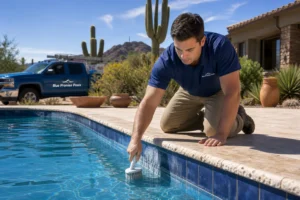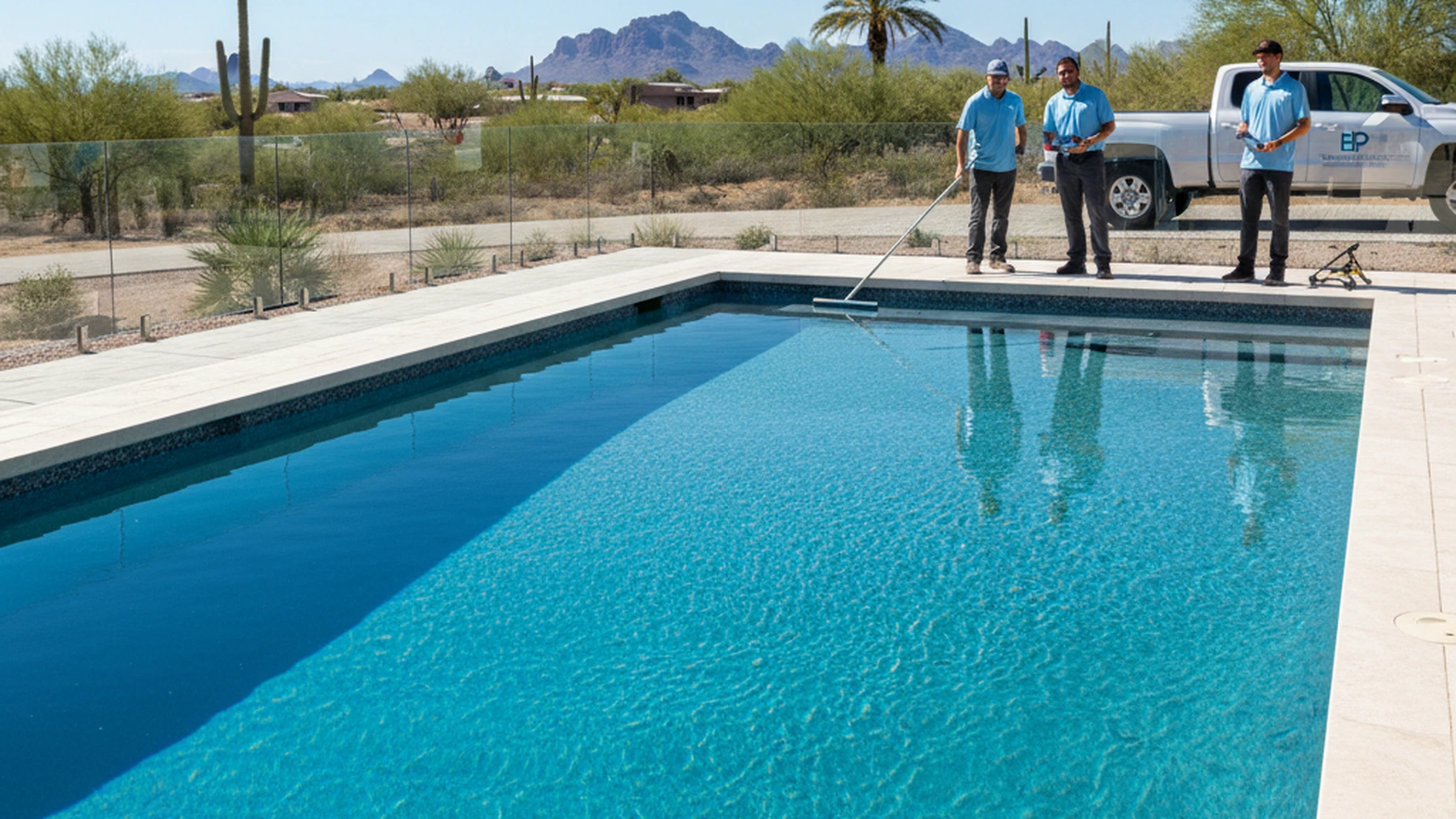
If you're budgeting for pool resurfacing in Scottsdale, the cost typically ranges based on pool size, surface material, and the extent of existing damage. Arizona's intense heat and hard water accelerate surface wear, making timely resurfacing essential for both appearance and structural integrity.
Published: April 10, 2026 | Blue Promise Pools Team | Pool Construction Experts
Why Scottsdale Pool Resurfacing Is Different From Other Markets
Scottsdale's climate is uniquely demanding on pool surfaces. UV exposure runs high year-round, water temperatures spike in summer, and the regional water supply tends to be hard, with elevated calcium and mineral content. That combination attacks plaster, pebble, and quartz surfaces faster than in cooler, softer-water regions.
Local pool owners often notice surface deterioration showing up as rough texture, staining, chalky residue, or small cracks well before the 10-year mark. Getting ahead of that deterioration with professional pool resurfacing services protects the shell, keeps water chemistry balanced, and restores the visual appeal of the pool deck and water.
The demand for resurfacing Scottsdale pools has grown as the city's housing stock ages and homeowners recognize the cost of ignoring surface wear.
Pool Resurfacing Materials: What You're Choosing Between
The surface material you select shapes both the upfront investment and the long-term experience. Here are the main options used in Scottsdale pool resurfacing:
Plaster (White Marcite)
Standard white plaster is the entry-level surface for pools. It gives a classic, clean look but tends to roughen and stain within 7 to 10 years in Arizona conditions. It is the most affordable resurfacing option and is often a good fit for older pools needing a functional refresh.
Quartz Aggregate
Quartz-blend finishes mix plaster with quartz crystals, producing a harder, more durable surface that resists staining better than plain plaster. The texture is smoother, colors hold longer, and the surface handles Arizona's heat and hard water with more resilience. This is a mid-range investment and one of the most popular choices in the Scottsdale area.
Pebble and Glass Bead Finishes
Premium surfaces like pebble aggregate and glass bead finishes offer the highest durability and the most striking visual impact. The rough, natural texture of pebble finishes is gentle on feet while being extremely resistant to chemical and UV damage. These surfaces routinely last 15 to 20 years with proper maintenance. They represent the best long-term investment for pool resurfacing in Scottsdale.
What Affects the Total Cost of Pool Resurfacing
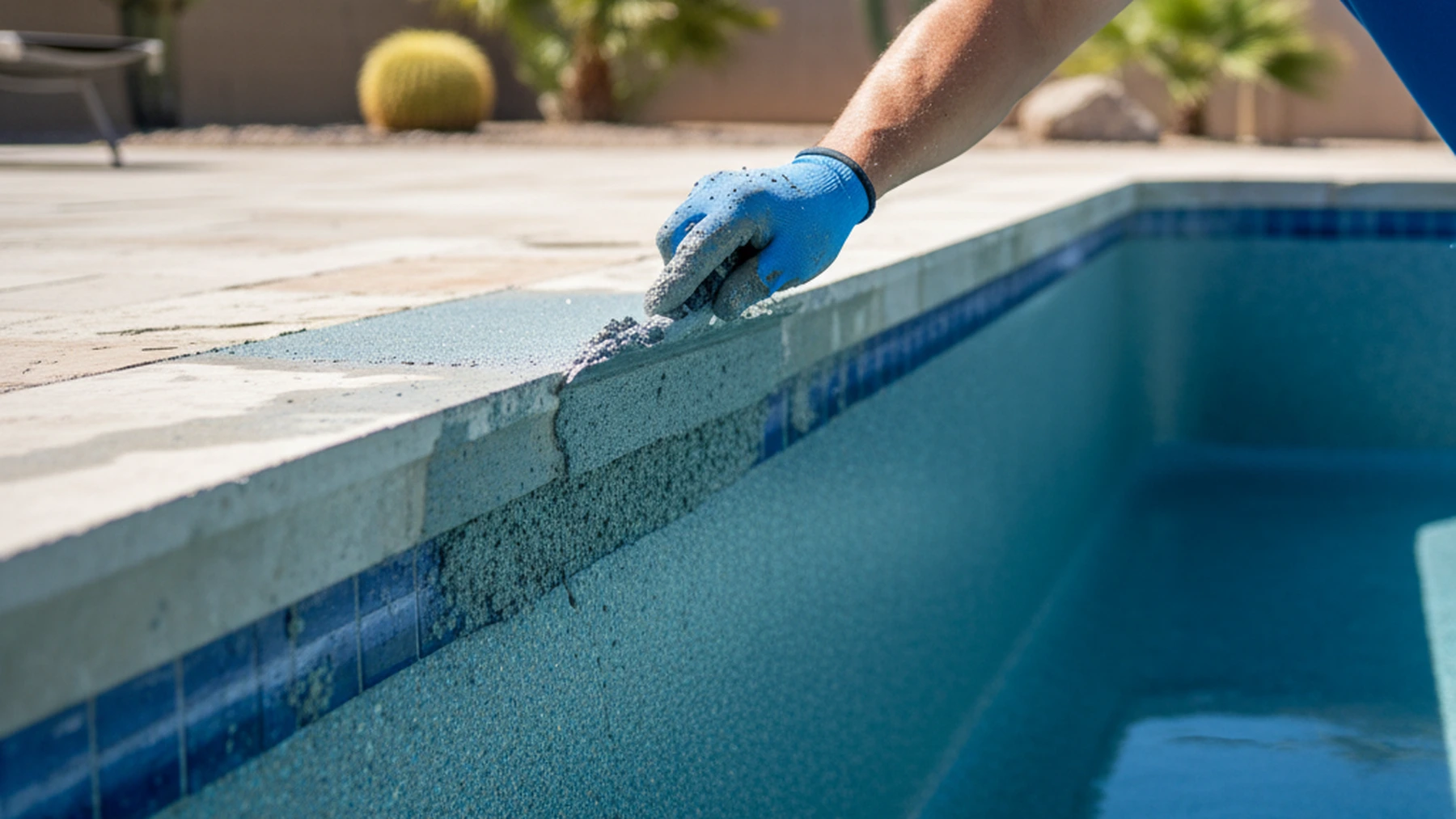
Pool resurfacing cost in Arizona is not a single fixed number. Several factors shift the final price for any given project:
Pool Size and Shape
Larger pools require more material and labor. Non-standard shapes with curves, steps, and water features add complexity and surface area.
Current Surface Condition
Pools with delaminating plaster, structural cracks, or heavy calcium buildup require more prep work before the new surface can be applied. That prep adds time and cost.
Surface Material Selected
Moving from basic plaster to quartz or pebble finishes increases material costs but extends the service life of the resurfacing significantly.
Pool Deck Resurfacing
Many homeowners address the pool deck at the same time as the pool shell. Pool deck resurfacing can involve cool decking, travertine overlays, or concrete coatings. Bundling both services with one contractor often reduces overall project cost.
Additional Repairs
Tile replacement, coping repair, plumbing work, or light fixture updates discovered during the resurfacing process will add to the scope and cost.
Contractor Experience and Warranty
Experienced Scottsdale pool resurfacing companies typically carry longer material and labor warranties. When comparing quotes, the experience level and warranty terms matter as much as the upfront number.
Important note on pricing: Pool resurfacing costs vary significantly by project. We do not publish generic price ranges here because a Scottsdale home with a 600-square-foot freeform pool, existing cracks, and a deck resurfacing request is a very different project from a 300-square-foot rectangular pool needing a straightforward plaster refresh. The best way to understand your actual cost is to request a free on-site estimate from Blue Promise Pools.
Signs Your Scottsdale Pool Needs Resurfacing Now
Not sure if your pool is ready for a new surface? These are the most common indicators Arizona pool owners encounter:
- Rough texture that scratches feet or snags swimsuits
- Visible staining from iron, copper, or calcium that does not respond to chemical treatment
- Chalky or etched surfaces caused by low pH or aggressive water chemistry over time
- Small cracks or spider cracking in the plaster surface
- Plaster delamination or hollow spots when you tap the shell
- Persistent algae growth in pitted or rough areas that can't be brushed away
- Age over 10 years with no prior resurfacing
If you're seeing two or more of these, resurfacing is likely overdue. Letting a deteriorating surface go too long can allow water to seep into the gunite shell, escalating a resurfacing project into a pool repair or full reconstruction.
The Pool Resurfacing Process: What to Expect
Understanding what happens during a professional scottsdale pool resurfacing project removes a lot of uncertainty. Here is a general overview of the process:
Step 1: Drain and Surface Prep
The pool is drained completely. The existing surface is chipped, sandblasted, or acid-washed to create a proper bond profile for the new material. Any structural repairs are completed at this stage.
Step 2: Tile and Coping Inspection
The waterline tile and coping are inspected for damage. If replacement is needed, this is the right time to address it.
Step 3: Surface Application
The new plaster, quartz, or pebble finish is applied by hand or spray and troweled smooth. Premium pebble finishes are hand-finished for a consistent result.
Step 4: Fill and Startup Chemistry
The pool is refilled with fresh water and a precise startup chemical process begins. This is critical for curing the new surface correctly, especially in Scottsdale's hard water environment. Improper startup chemistry can shorten the life of even a high-quality surface.
Step 5: Ongoing Care
After resurfacing, maintaining proper water chemistry is essential. Aggressive water (low pH or low calcium hardness) will etch a new surface quickly. Blue Promise Pools offers weekly pool service to keep chemistry balanced year-round.
Pool Deck Resurfacing: Worth Adding to the Project?
Many Scottsdale homeowners discover their pool deck is cracked, faded, or hot to walk on when they schedule pool resurfacing. Arizona's sun fades and expands concrete over years, and older cool deck coatings lose their reflective properties and texture.
Addressing deck resurfacing at the same time as pool shell resurfacing has practical advantages. The area is already disturbed, equipment is on site, and contractors can often price the combined scope more efficiently. Popular deck resurfacing options in Scottsdale include:
- Cool deck re-coating for a like-for-like refresh of the original surface
- Travertine pavers for a premium, heat-resistant natural stone look
- Stamped concrete overlays for decorative patterns at a mid-range cost
- Kool Deck alternatives with improved UV and heat resistance
A refreshed pool deck paired with new pool surfaces gives the entire outdoor space a cohesive, updated look that adds real value to your Scottsdale home.
Blue Promise Pools: Local Experience, Scottsdale Standards
Blue Promise Pools specializes in pool resurfacing and pool construction across the Scottsdale area. Our team understands the specific challenges Arizona pool owners face: hard water chemistry, sustained UV exposure, and the temperature extremes that stress pool surfaces season after season.
We work with homeowners to match the right surface material to their pool, their budget, and their usage patterns. Every resurfacing project includes a thorough evaluation of the existing surface, honest recommendations on scope, and a clear explanation of what the new surface will look like and last.
When you're ready to understand what resurfacing your pool actually costs, contact Blue Promise Pools for a free on-site estimate. We'll walk you through the options and give you a straightforward quote for your specific pool.
Frequently Asked Questions About Pool Resurfacing in Scottsdale
How long does pool resurfacing take in Scottsdale?
Most residential pool resurfacing projects in the Scottsdale area take 5 to 10 days from drain to fill, depending on pool size, surface material, and whether deck resurfacing or repairs are included. The startup chemistry process after refilling adds another week of monitoring before the pool is fully ready for swimming.
How long will a resurfaced pool last in Arizona?
Surface lifespan depends on the material chosen and how well water chemistry is maintained. Plaster surfaces typically last 7 to 12 years in Arizona conditions. Quartz aggregate finishes generally last 12 to 15 years. Premium pebble finishes can reach 15 to 20 years with consistent care. Scottsdale's hard water and UV intensity make regular maintenance particularly important for maximizing surface life.
Can I resurface my pool without replacing the tile?
Yes. Pool tile and pool surface resurfacing are separate scopes. Many homeowners keep existing tile in good condition and resurface only the shell. If tile is cracked, faded, or falling off, replacing it during resurfacing is more efficient since the pool is already drained and the area is accessible.
What is the difference between pool resurfacing and pool replastering?
Pool replastering specifically refers to applying a new plaster (marcite) surface. Pool resurfacing is a broader term that includes plaster, quartz aggregate, pebble, and glass bead finishes. When a contractor says "replaster," they typically mean a white plaster application. When they say "resurface," the material may vary. Always confirm which material is being quoted when comparing bids.
How do I know if my pool needs resurfacing or a full repair?
Surface issues like roughness, staining, and minor cracking typically indicate resurfacing is the right solution. If you have significant structural cracks, loss of water (indicating a leak in the shell), or severe delamination, a more detailed evaluation is needed to determine whether resurfacing alone is sufficient or whether underlying repairs are required first. Blue Promise Pools can assess your pool and give you an honest recommendation during a free estimate.