If you have walked out to your backyard and found your pool looking more like a swamp than a sparkling oasis, you already know how jarring that can be. Green pool treatment in Scottsdale is one of the most common calls pool service companies receive, especially as temperatures climb and monsoon season brings its own set of challenges. The good news: a green pool is fixable. With the right process and a little patience, you can have your pool back to clear, swimmable water faster than you might expect.
Why Does a Pool Turn Green?
Green water is almost always caused by algae. Algae spores are microscopic and exist naturally in the environment. They drift into your pool through the air, on swimmers, and even on pool equipment. Under normal conditions, your pool's sanitizer keeps algae growth in check. When sanitizer levels drop, algae seizes the opportunity and multiplies rapidly.
In the Scottsdale and Phoenix area, algae has some powerful allies. Intense UV radiation from our desert sun breaks down chlorine faster than it does in cooler climates. High water temperatures accelerate algae growth. Dust storms deposit organic material into the pool. And during the summer months, pools often see heavy use just as chlorine demand peaks. Any break in your maintenance routine, a skipped treatment, a malfunctioning pump, or an unusually hot stretch of weather can tip the balance toward a full-blown algae bloom.
The shade of green also tells you something. Bright, lime-green water usually means free-floating algae that has not yet attached to surfaces. Darker green or blue-green tints can indicate more established growth. Slimy patches on the walls or floor are a sign that algae has begun colonizing surfaces, which takes a bit more work to eliminate.
Is It Safe to Swim in a Green Pool?
The short answer is no. Green pool water is not safe to swim in. Beyond the algae itself, green pools often harbor bacteria that thrive in the same low-sanitizer conditions that let algae flourish. Cloudy water also reduces visibility, which creates a safety risk. It is best to keep everyone out until the water is fully restored and tests clear.
Green Pool Cleanup: The Step-by-Step Process
Restoring a green pool takes a systematic approach. Skipping steps leads to rebound blooms and wasted product. Here is how professional pool services handle algae pool treatment in Arizona.
Step 1: Test the Water
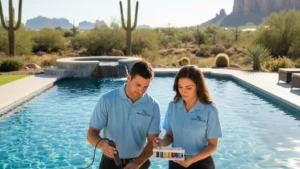
Before adding anything, test your water chemistry. You need a baseline on pH, alkalinity, cyanuric acid, and chlorine levels. Algae treatment works best when pH is in the correct range. If your pH is too high, chlorine becomes far less effective and your shock treatment will underperform. Adjust pH and alkalinity first, then move forward.
Step 2: Brush the Entire Pool
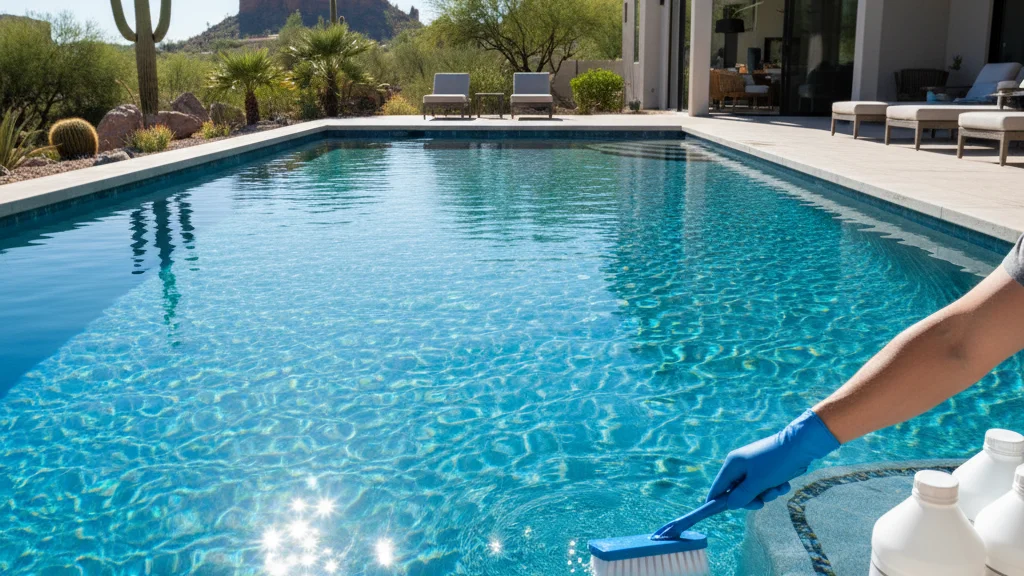
This step is easy to skip and costly to overlook. Use a stiff-bristle brush on all surfaces: walls, steps, corners, behind ladders, and the floor. Brushing breaks up algae colonies and dislodges algae that has attached to plaster or tile. This exposes the algae cells to the sanitizer you are about to add, dramatically improving treatment effectiveness.
Step 3: Shock the Pool
Shock treatment is the core of algae pool treatment in Arizona. Shocking means adding a large dose of chlorine, far above the normal maintenance level, to overwhelm and kill the algae. The amount of shock required depends on the severity of the bloom. Severely green pools require a heavier dose than lightly tinted water. Always add shock in the evening or after sunset. Daytime UV exposure breaks down unstabilized chlorine quickly, wasting product and reducing effectiveness.
For green pool cleanup in Phoenix and Scottsdale, it is common to need multiple shock treatments over consecutive days for heavy blooms. Do not assume one treatment will solve a serious algae problem overnight.
Step 4: Run the Filter Continuously
Dead algae and debris must be removed from the water, and that is your filter's job. Run your filtration system continuously during treatment, ideally 24 hours a day until the water clears. For sand or DE filters, you will likely need to backwash frequently as the filter loads up with dead algae. If you have a cartridge filter, rinse it every 12 hours or as needed.
Skipping adequate filtration is one of the most common reasons pools stay cloudy after shocking. The chlorine can kill the algae, but if the dead material stays suspended in the water, it will keep the pool murky and can fuel secondary bacterial growth.
Step 5: Add a Pool Algaecide
After shocking, adding a quality algaecide gives you an extra layer of protection. Algaecide disrupts algae cell membranes and helps prevent regrowth. It is not a replacement for chlorine, but it works well as a follow-up treatment and as part of a regular maintenance routine.
Step 6: Test Again and Adjust
Once the water begins clearing, retest your chemistry. Chlorine levels will be elevated immediately after shocking, which is expected. As levels normalize, make sure pH, alkalinity, and cyanuric acid are all within range. Balanced water chemistry is what keeps algae from coming back.
Step 7: Vacuum to Waste
After the water clears, there will likely be debris on the pool floor. Vacuum the pool on the waste setting if your filter allows it, which sends the water and debris directly out rather than back through the filter. This removes dead algae and sediment without clogging your filter.
How Long Does Green Pool Treatment Take?
Timeline depends on how bad the bloom is when you start. A lightly green pool treated aggressively can clear up within 24 to 72 hours. Heavily green pools, where you cannot see the bottom, typically take three to five days of consistent treatment and filtration. Extremely severe cases may take longer.
The key variable is consistency. Running the filter around the clock, brushing daily, retesting, and retreating as needed moves the process along. Cutting corners extends the timeline.
Preventing Algae from Returning
Once your pool is clear, keeping it that way requires a few reliable habits.
Maintain consistent chlorine levels. In Scottsdale's heat and sun, this means testing frequently, especially during summer. Relying on weekly tests is often not enough during monsoon season or heavy swim periods.
Keep cyanuric acid in range. Cyanuric acid is a stabilizer that protects chlorine from UV degradation. Too little and your chlorine burns off before it can do its job. Too much and it reduces chlorine's effectiveness. Staying in the correct range is particularly important in our high-UV environment.
Run your pump long enough. Many pool owners underestimate how long they need to run their pump in summer. Complete water turnover is necessary for effective sanitization and filtration. A pool care professional can help you dial in the right run time for your pool's size and conditions.
Brush weekly. Regular brushing prevents algae from establishing a foothold on surfaces before your sanitizer can reach it.
Shock after heavy use or storms. Monsoon season deposits pollen, dust, and organic debris into your pool. Heavy swimmer loads also deplete chlorine rapidly. Shocking after these events helps maintain protection.
When to Call a Professional
Some green pool situations are best left to professionals. If your pool has been green for an extended period, if previous DIY treatments have not worked, or if you are seeing recurring blooms despite regular maintenance, there may be an underlying issue. A malfunctioning pump, an undersized filter, incorrect stabilizer levels, or a plumbing problem can all sabotage your water chemistry. A professional assessment can identify what is driving the problem and get it resolved properly.
For pools that are severely green, professional treatment is often faster and more cost-effective than multiple rounds of DIY product. Professionals know how to dose correctly for different severity levels, which avoids over-treating or under-treating and wasting product.
Restore Your Pool with Blue Promise Pools
A green pool does not have to ruin your summer. With the right approach and timely action, most algae blooms can be resolved within a few days. If your Scottsdale or Phoenix area pool has turned green and you want it back to clear fast, Blue Promise Pools is ready to help. Our team understands the specific challenges that Arizona's climate creates for pool owners and brings the experience to handle everything from routine maintenance to serious algae cleanup. Reach out to Blue Promise Pools and let us get your water back where it belongs.