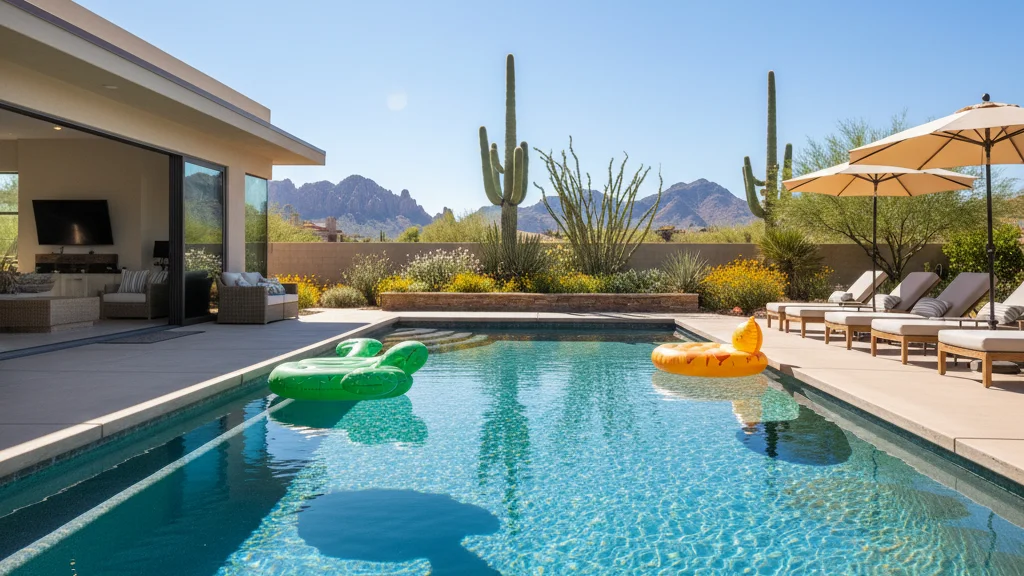
If you want to prepare pool for summer arizona the right way, the window to act is shorter than most homeowners expect. Once triple-digit temperatures arrive in the Valley, pool chemistry shifts fast, algae pressure climbs, and equipment that was running fine in February can start showing its age. Getting ahead of the heat means your pool is ready to swim in from day one, not two weeks after you first cannon-ball in.
Why Summer Pool Preparation Looks Different in Arizona
Most pool maintenance guides are written for climates with mild summers. Arizona is not that. Scottsdale and Phoenix pool owners deal with water temperatures that can push 90 degrees by late June, intense UV exposure that burns through chlorine faster than anywhere else in the country, and monsoon season that drops organic debris directly into the water. That combination creates conditions where a pool that looks clean on Friday can turn cloudy or green by Sunday if the chemistry is off.
Summer pool preparation here is less about a single spring clean and more about building a system that can hold up through five solid months of heavy use and heat stress.
Start With a Full Equipment Inspection
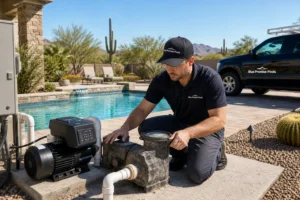
Before the heat arrives, go through every piece of equipment connected to your pool. This is the single most important step in any summer pool preparation checklist.
Pump and motor: Listen for unusual noise and check that flow rates match what the manufacturer specifies. A pump working harder than it should be is often the first sign of a clog or impeller wear. In Arizona summer, your pump runs longer hours, which means small problems become big ones faster.
Filter: Whether you run a sand, cartridge, or DE filter, summer is when it earns its keep. Cartridge filters should be inspected and cleaned before the season. Sand and DE filters should be backwashed and the media checked for channeling or clumping. A clogged filter forces the pump to work overtime and reduces sanitizer effectiveness.
Heater or heat pump: Many Arizona pool owners run heaters only in winter, but if yours stayed dormant through the cooler months, fire it up before summer to confirm it lights cleanly and the heat exchanger shows no signs of corrosion.
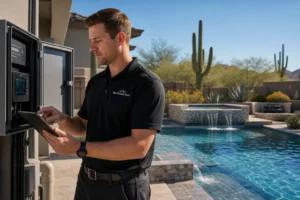
Automation and timers: Check that your pump timer is set for longer summer run times, typically a minimum of eight to ten hours daily when water temperatures are high. Automation systems should be tested so valve actuators and salt cell controls are responding correctly.
Is Your Pool Chemistry Ready for the Heat?
Chemistry is where summer preparation either holds together or falls apart. High water temperatures accelerate every chemical reaction in the pool. Chlorine demand doubles. Algae finds it much easier to establish a foothold. Stabilizer levels that were acceptable in March may not be adequate by July.
Here are the key numbers to dial in before summer:
Cyanuric acid (CYA): This is the stabilizer that protects chlorine from UV degradation. In Arizona, maintaining CYA between 50 and 80 ppm is essential. Without adequate stabilizer, direct sun destroys free chlorine within hours. Salt water pool owners should aim for the higher end of that range.
Free chlorine: Target 2 to 4 ppm for a stabilized outdoor pool. If your CYA is dialed in, this range holds reasonably well. If CYA is too low, you will constantly be adding chlorine and never seeing the benefit.
pH: Keep it between 7.4 and 7.6. Arizona's fill water tends to be hard and slightly alkaline, which means pH creep is common. High pH reduces chlorine effectiveness and can cause scale buildup on tile and equipment.
Total alkalinity: Target 80 to 120 ppm. Alkalinity acts as the buffer that prevents wild pH swings. Low alkalinity makes pH erratic and harder to control during monsoon season when rain can shift water balance quickly.
Calcium hardness: Aim for 200 to 400 ppm. Arizona tap water is already high in calcium, so you are more likely to need to dilute than to add. Calcium that is too high causes white scale on surfaces and inside plumbing.
If you have not had a full water analysis done recently, get one before summer. A professional pool maintenance scottsdale service can test all of these parameters and give you a full picture of what needs adjusting.
What Should You Do About Algae Prevention?
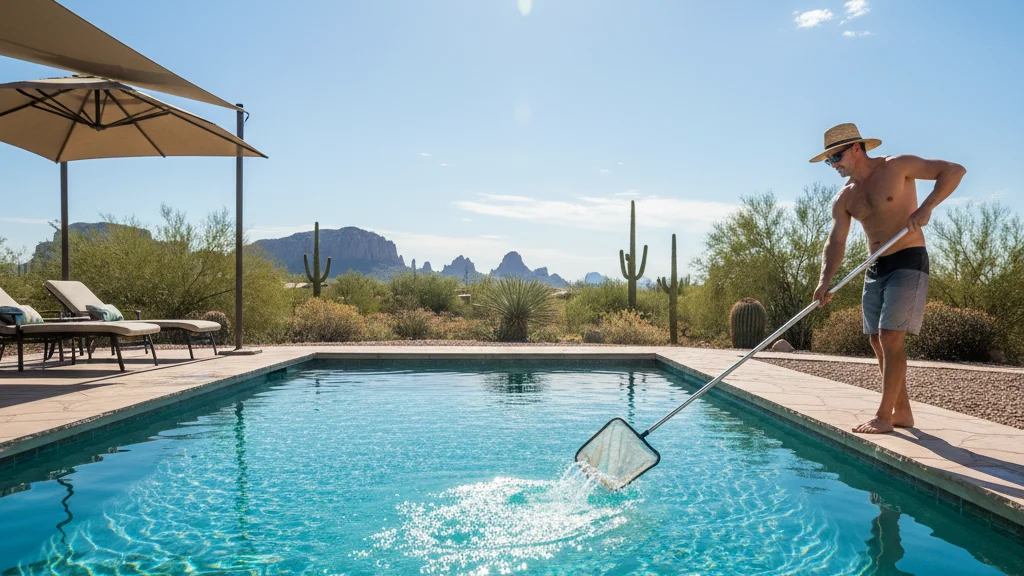
Algae prevention in an Arizona summer is not optional. The question is only how aggressive you want to be. A few strategies that make a real difference:
Shock the pool before summer starts. A clean breakpoint chlorination treatment before temperatures climb gives you a sanitized starting point and eliminates any early-season algae spores before they have a chance to settle.
Use a quality algaecide. A preventative algaecide added monthly throughout summer adds a second line of defense, especially in areas of the pool with lower circulation like steps and corners.
Brush walls and floor weekly. Algae takes hold in biofilm before it becomes visible. Regular brushing disrupts that process and helps sanitizer reach the surfaces where growth starts.
Maintain circulation during peak sun hours. Running your pump on a schedule that includes midday is worth the electricity cost. That is when UV is most intense and chlorine is being consumed fastest.
Pool Maintenance Scottsdale: How Often Should You Service During Summer?
During Arizona summer, most pools benefit from weekly professional attention rather than bi-weekly. Heat and heavy use mean water conditions change fast. A pool that tests perfect on Monday may need chemical adjustment by Friday, especially when the household is using it daily or you are hosting gatherings.
Weekly service typically includes testing and adjusting all chemistry, emptying baskets, brushing surfaces, checking equipment, and skimming debris. If your pool is surrounded by trees or is exposed to significant wind, debris loads increase substantially during monsoon.
For pools with salt chlorine generators, the salt cell should be inspected at the start of summer for scale buildup. A heavily scaled cell produces less chlorine precisely when you need it most, which is a combination that leads to problems quickly.
Do Not Overlook the Small Details
A few things that often get skipped but make a real difference in summer:
Pool deck and coping inspection: Expansion and contraction through the cooler months can open cracks in coping or deck surfaces. Catching these before summer prevents them from widening.
Check all drain covers: The Virginia Graeme Baker Act requires anti-entrapment drain covers on all residential pools. Before the swim season opens, confirm your covers are current and properly secured.
Test all safety equipment: Pool alarms, fencing latches, and safety covers should be verified before the first heavy use of the season.
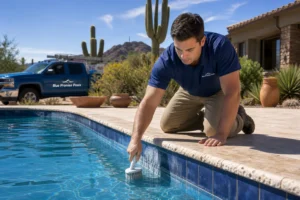
Clean the waterline tile: Calcium scale and sunscreen buildup accumulates on tile throughout the year. A clean waterline heading into summer looks better and is easier to maintain than letting it build all season.
Getting Ready for Summer, the Right Way
The pools that look great all summer in Scottsdale and Phoenix are not the ones with the most equipment. They are the ones that were set up correctly before the heat hit. Good chemistry, well-maintained equipment, and consistent weekly service create a pool that is ready when you are, whether that is a quiet weeknight swim or a full Memorial Day weekend.
If you want professional help getting your pool summer-ready, Blue Promise Pools serves the Scottsdale and Phoenix area with thorough inspections, chemistry balancing, and ongoing maintenance plans built for Arizona conditions. Reach out to schedule a pre-summer service visit and start the season right.