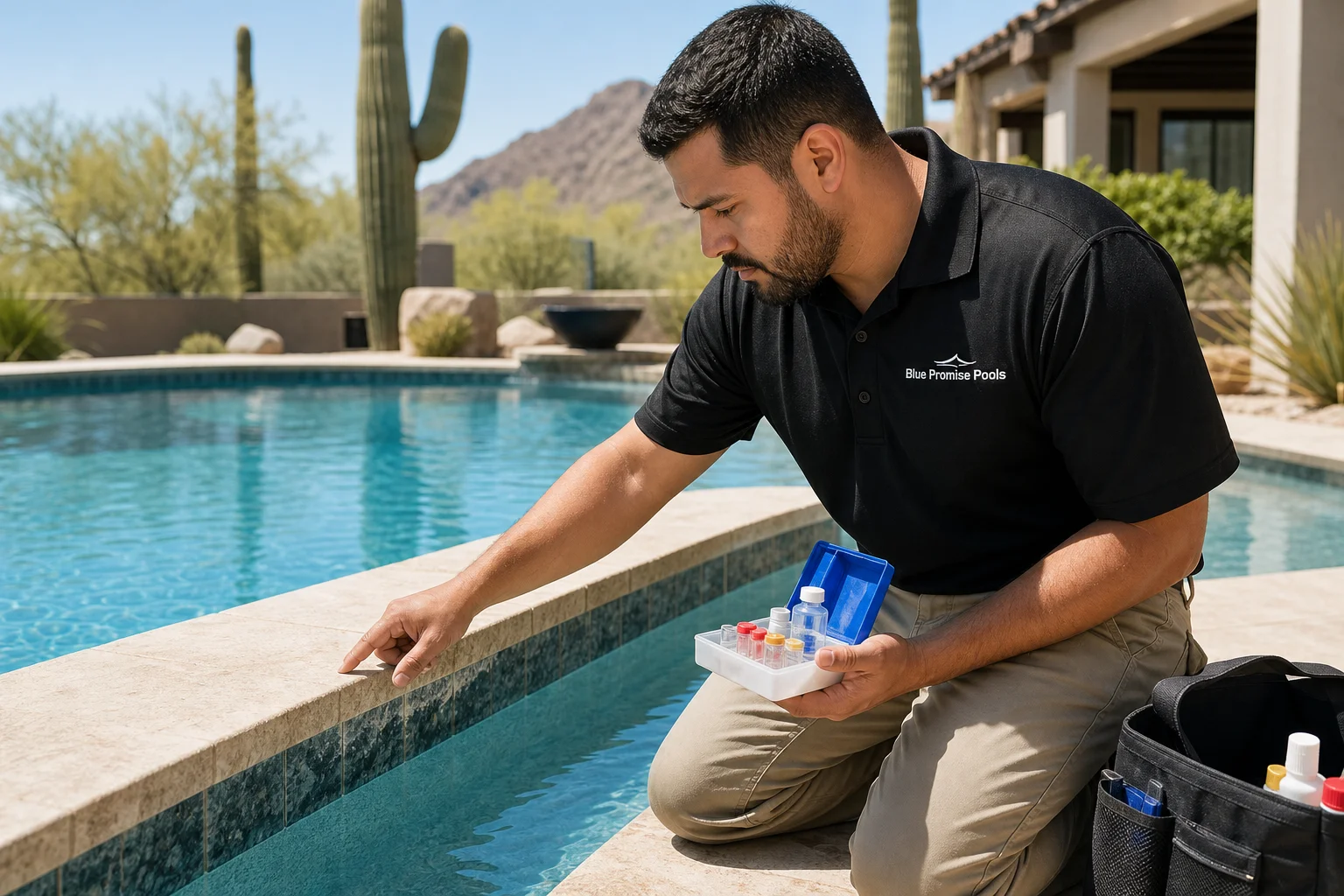
Arizona tap water is some of the hardest in the country, and dealing with hard water in your Arizona pool is a challenge every local homeowner faces. The calcium and mineral buildup it leaves behind can cloud your pool water, roughen surfaces, and strain equipment. With consistent pool care and the right tools, you can keep your water clear all season.
Why Arizona Pool Water Gets So Hard
Arizona draws most of its municipal water from the Colorado River and local groundwater sources. Both carry high concentrations of dissolved minerals, especially calcium and magnesium. As water evaporates in the desert heat, it leaves those minerals behind and concentrates them in the pool water over time. Arizona's 300-plus sunny days per year mean evaporation never really lets up, so the mineral load builds steadily.
The American Chemistry Council defines hard water as water containing more than 120 mg/L of calcium carbonate. In many Phoenix-area municipalities, tap water delivers 250 to 400 mg/L, giving Arizona pools a significant hardness head start before a single swim happens. This is the core reality every local pool owner is working against.
What High Hardness Levels Do to Your Pool
When calcium hardness climbs too high, the effects show up quickly across every part of the pool.
Scale Buildup on Surfaces and Equipment
Calcium carbonate deposits form a rough, white crust on pool surfaces, tile grout, and the waterline. This scale buildup traps algae, makes surfaces uncomfortable underfoot, and shortens the life of plaster and pebble finishes. Equipment suffers too. Scale coats heater elements, clogs filters, and reduces pump efficiency over time, leading to repairs that are easy to avoid with consistent pool chemistry management.
Cloudy Pool Water
High mineral content scatters light rather than transmitting it cleanly, turning a sparkling blue water pool into a hazy, uninviting one. No amount of shocking or clarifier will clear pool water made cloudy by excess calcium. The minerals themselves have to come down first.
Skin and Eye Irritation
Pool owners often blame chlorine for dry skin and irritated eyes after a swim. Hard water is frequently the real cause. Calcium magnesium ions alter the water's feel and interfere with how chlorine binds to contaminants, making pool chemistry harder to maintain at healthy, comfortable levels.
Testing and Monitoring Calcium Hardness
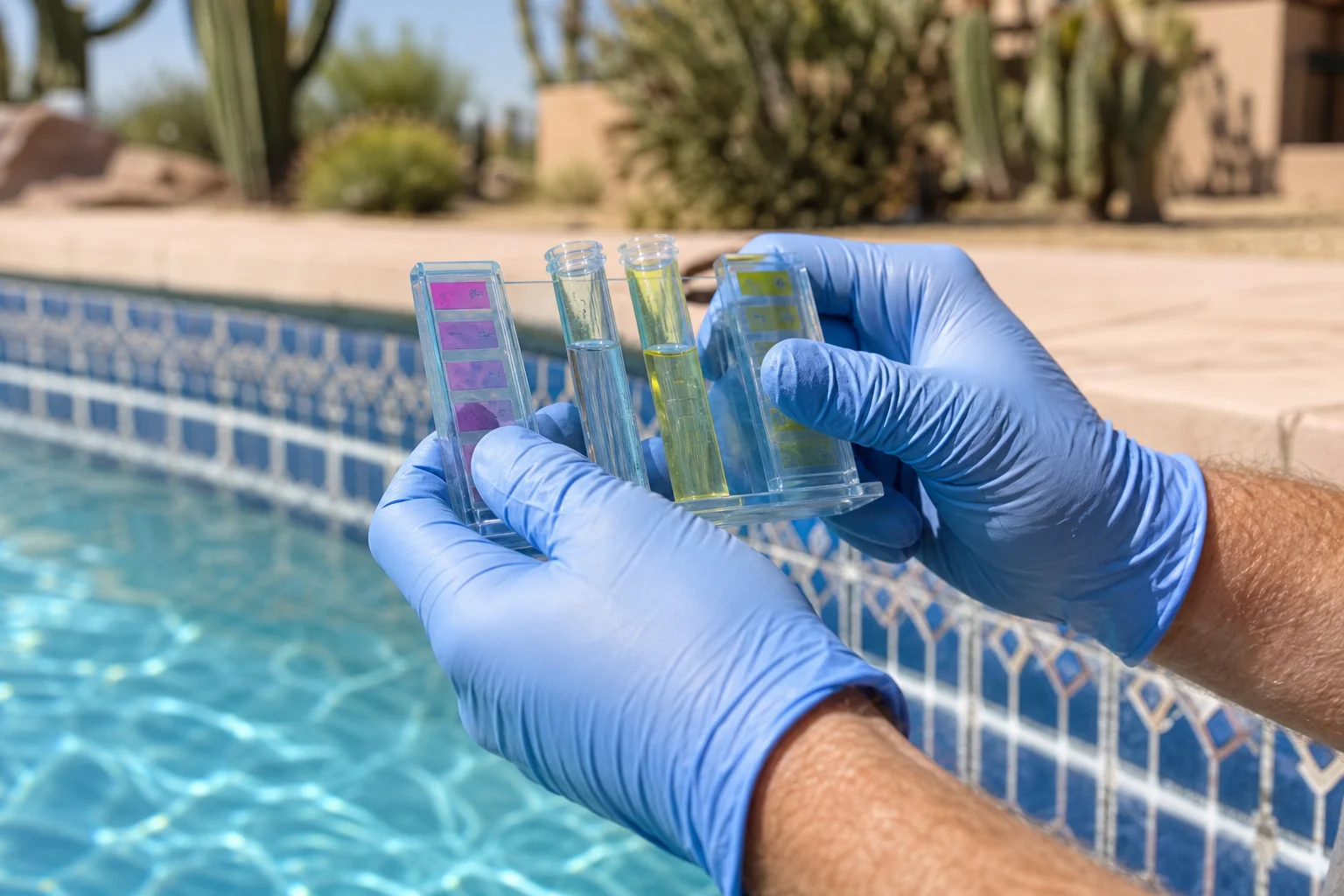
The ideal calcium hardness range for most pools is 200 to 400 ppm, with 250 to 350 ppm as the sweet spot for Arizona's evaporation-heavy conditions. Keeping hardness levels in that band protects surfaces without letting scale take hold.
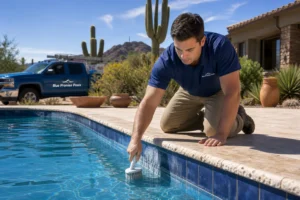
Pool owners should test calcium hardness at least once a month. A basic drop-count kit or digital meter handles it at home. For a complete picture of pool chemistry, including total alkalinity, pH, stabilizer, and calcium hardness together, a professional water analysis every 60 to 90 days is a smart investment.
Blue Promise Pools' weekly pool service includes regular water testing on every visit, so your numbers never catch you off guard.
Treating Hard Water: What Actually Works
Once calcium hardness climbs above 500 ppm, standard balancing chemicals can only do so much. These are the tools that genuinely move the needle.
Partial Drain and Refill
Draining 25 to 33 percent of the pool and replacing it with fresh water dilutes the mineral concentration. This works well for moderate overages and is the most common first response. The limitation in Arizona is that local tap water starts at elevated hardness levels, so repeated top-offs gradually bring the numbers right back up.
Sequestering Agents
Chelating or sequestering agents bind calcium magnesium ions in the water and hold them in suspension so they pass through the filter rather than depositing on surfaces. They do not remove minerals from the water, but they prevent scale formation and are a practical maintenance tool between deeper interventions.
Reverse Osmosis Filtration
For pools with severe hardness, total dissolved solids above 3,000 ppm, or persistent scale despite regular care, reverse osmosis is the most thorough solution available. A reverse osmosis unit processes the pool water on-site through a semipermeable membrane, removing calcium, magnesium, cyanuric acid, phosphates, and other dissolved solids while keeping most of the water in the pool.
Compared to a full drain and refill, reverse osmosis conserves roughly 75 to 85 percent of the existing water, which matters considerably in a state with ongoing conservation concerns. A pool that has taken years to load up with minerals can be reset to near-pristine condition in a single treatment.
Building a Consistent Pool Care Routine
Managing hard water is a long-term commitment, not a one-time fix. Arizona pool owners need a maintenance schedule built around the region's heat and evaporation rate.
Test calcium hardness monthly and after any large water additions. Keep pH between 7.4 and 7.6, since high pH speeds up calcium precipitation and accelerates scale formation. Use a sequestering agent on a regular basis, especially during summer when evaporation peaks. Brush pool surfaces weekly to break up early mineral deposits before they harden into scale. Schedule a professional pool care visit quarterly to catch trends before they turn into costly repairs.
If your surfaces already show staining or roughness from years of hard water exposure, pool resurfacing restores a smooth, clean finish and gives your maintenance routine a clean starting point.
Frequently Asked Questions
What is the ideal calcium hardness level for an Arizona pool?
For most Arizona pools, a calcium hardness level of 250 to 350 ppm is the target. The state's high evaporation rate concentrates calcium faster than in cooler climates, so staying in the middle of the recommended 200 to 400 ppm range gives pool owners a workable buffer before scale problems develop or surfaces begin to show wear.
How does hard water affect pool chemistry balance?
Hard water makes pool chemistry harder to stabilize across the board. High calcium levels push pH upward, accelerate scale formation, and reduce chlorine effectiveness. Pool owners managing hard water need to test and adjust more frequently because calcium magnesium imbalances throw off the entire chemical balance faster than in low-mineral environments.
Can I use a water softener to fix hard water in a pool?
No. Residential water softeners swap calcium and magnesium ions for sodium ions. In a pool, excess sodium raises total dissolved solids and can accelerate corrosion on metal equipment without improving water quality in any meaningful way. Partial drains, sequestering agents, and reverse osmosis are the correct approaches for pool water.
How often should Arizona pool owners test for hardness levels?
Monthly testing is the minimum for Arizona pools. During summer, when evaporation is highest and water additions are frequent, testing every two weeks is smarter. Any time a significant volume of water is added to the pool, retest before making chemistry adjustments to get an accurate baseline.
When does a pool need reverse osmosis treatment?
Reverse osmosis is the right call when calcium hardness exceeds 600 ppm, when total dissolved solids pass 3,000 ppm, or when repeated draining and balancing no longer keeps hardness levels stable. It is also the preferred option when water conservation is a priority, since it recycles the majority of the existing pool water rather than draining and replacing it.
Hard water is one of the most common obstacles Arizona pool owners face, but it does not have to stay that way. If your pool is fighting scale, cloudy water, or pool chemistry that will not stay balanced, the team at Blue Promise Pools is ready to help. Contact us today to schedule a water analysis and build a plan that keeps your pool looking its best all year.